Unified State Language · Experiment record
The Tanakh atlas returns with a source-based challenge.
The structured reading arrived intact. Its receiver then opened the included source and asked whether the atlas had given enough weight to a further organizing idea.
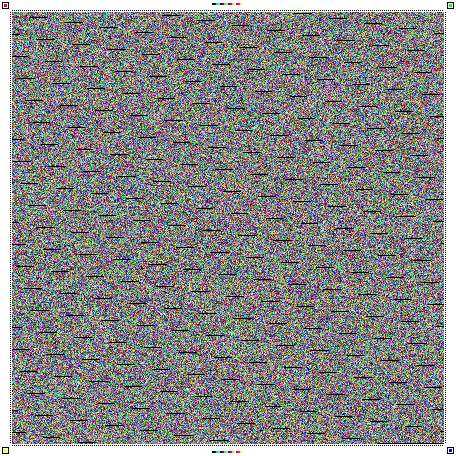
The Tanakh trial has returned a successful recovery of the USL1 expression carried by its CVP2 image. The supplied receiver and separately written Python checks recovered identical bytes. Every selected concept resolved through the pinned checked dictionary, and every carried quotation matched the retained JPS1917 English source.
The image is 456 × 456 pixels and 550,363 bytes. It transports an authored conceptual overview with its context; the full source and frozen lexical base are separate inputs in the receiver kit. It does not reconstruct the complete scripture from the image alone.
A reading that can answer a question
The atlas follows Torah, Prophets, and Writings through 24 navigational groupings and 39 separately cited components. It offers three overlapping accounts of belonging: practical obligation arising from received life, covenant distinction and regulated membership, and inherited arrangements challenged by new claims or recognition.
The receiver understood those as competing priorities within an authored reading. It also preserved a concrete tension: the daughters of Zelophehad’s successful inheritance petition in Numbers 27 does not erase the later marriage constraint in Numbers 36, and that constraint does not erase the entitlement gained. The comparison uses checked concepts 194 and 781, with their different application and review histories retained.
Its additional question came from Deuteronomy 10:17–19. Those verses portray divine impartiality and care for vulnerable people, then address the community’s love for the stranger. The receiver proposed giving greater organizing weight to divine justice and generosity as a model for human conduct.
None of those three verses was among the carried quotations. They were consulted afterward in the supplied source and clearly identified as additional evidence. The receiver did not manufacture encoded concept references for them. The challenge concerns the reading’s emphasis, while leaving the successful recovery intact.
A checked definition does not approve every application. The receiver retained the distinction between 112 newly reviewed records and 79 proposed JPS applications of older checked definitions. Matching a quotation to its source does not automatically approve the interpretive use made of it.
The record remains inspectable
This was one contextual receiving conversation labelled GPT-6 Astra Pro, with substantial earlier USL discussion. It was not blinded. Recovery used supplied tools plus separately implemented checks; full Carrier policies still relied on supplied validators. No browsing or agents were used, according to the receiver’s method record.
The publication audit reproduced the exact packet and expanded expression, and all 51 returned tests passed again locally. The reading assessment also records some partial explanations; successful recovery does not mean every requested distinction received a full prose discussion. A historical warning about earlier reuse of working IDs w3–w9 remains preserved; every selection in this expression resolves through its checked snapshot.
The contribution is an inspectable exchange: a proposed reading, exact references and evidence, a recovered interpretation, and a source-grounded reason to reconsider its emphasis.