Unified State Language · Experiment USL-E01 · Two-receiver edition · 8 September 2026
One image. Two receiving AIs. The same recovered message—and a clearer view of where exact structure ends and interpretation begins.
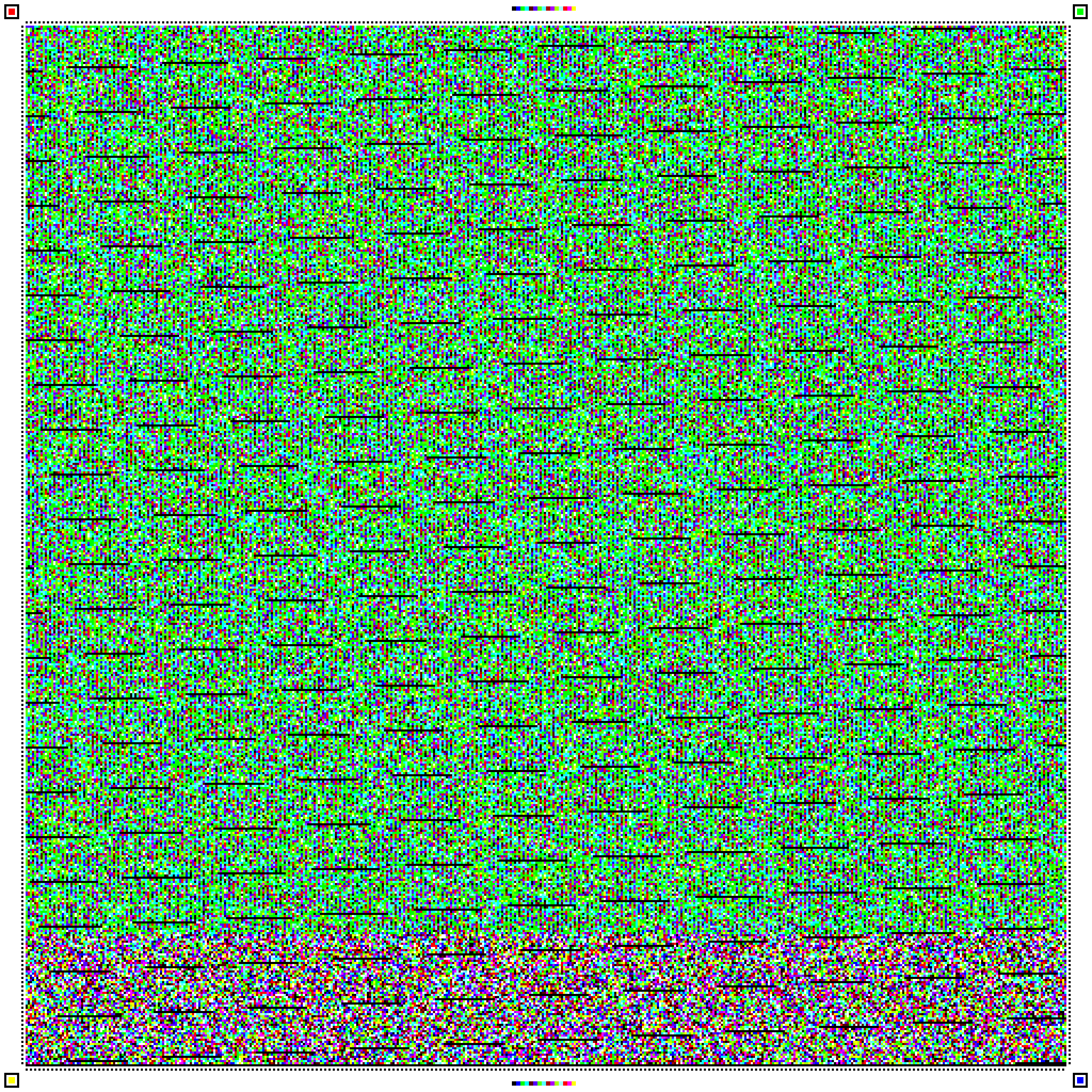
We asked an AI to compose something through the existing Carrier vocabulary, carried that expression in one CVP1 image, and asked a receiving AI to reconstruct the message and explain it. After the first return from ChatGPT, Michael Tulsky repeated the receiving task with Claude.
Both returned the same 100,551-byte USL1 packet, identical to the frozen sender original. Both recovered the same structured expression and the same eleven selected concept references. We inspected the supplied decoders and repeated their recovery locally.
The second return strengthens the evidence that this artifact can be recovered through separately supplied implementations. It also makes the interpretation comparison more useful: the selected meanings and logical structure survive, while some wording in Claude’s prose adds emphasis or assumptions that the sender did not encode.
The code audit adds another distinction: Claude’s decoder recovers this valid artifact, but it does not enforce every rule in the supplied recipe. We retain that finding alongside the successful recovery.
This edition preserves the first result and adds the second archive, a direct comparison and the new audit findings. The original message, image, dictionary snapshot and evaluation rubric remain unchanged.
The question behind the experiment
Our preceding article, When Knowledge Becomes Vocabulary, proposed a shift from encoding finished sentences to composing through shared conceptual records. An author could choose concepts, assign their roles, add conditions and qualifications, and send that new expression to another participant.
USL-E01 puts one instance of that proposal into practice. Its question was specific: could a receiving AI reconstruct the selected references and their relationships from an image, then explain the message faithfully?
The sender composed the structure first. Its separate English interpretation was written afterward and was not an encoder input. Eleven existing checked entries supplied the concepts; no new dictionary entries were needed.
What the sender chose to say
The expression is an invitation to make one public, reusable lesson from an unresolved disagreement. Love & Freedom supplies its governing principle. Other concepts establish distinctness, mutual understanding, reproducibility, uncertainty, correction and continuity.
The novelty lies in the composition: who offers what, which criteria apply to each contribution, when a duty to revise arises, and which choices remain voluntary. None of the individual dictionary entries contains this whole message.
| Alias / checked ID | Concept | Role in this message |
|---|---|---|
| C0 / 43 | Love & Freedom | Governing principle for both participants. |
| C1 / 89 | freedom to remain distinct | Each participant retains the right to remain distinct. |
| C2 / 41 | meaning before agreement | A method for mutual understanding before deciding on agreement. |
| C3 / 36 | the reproducible handoff | An offer from sender to recipient. |
| C4 / 55 | inspectable assumption | A quality criterion for every contribution. |
| C5 / 56 | visible uncertainty | A quality criterion for every contribution. |
| C6 / 99 | we can check each other | An invitation to reciprocal checking. |
| C7 / 48 | the open channel | Maintain when disagreement occurs within this project. |
| C8 / 57 | correction without erasure | Revise when evidence changes concerning a published contribution. |
| C9 / 91 | continuity across minds | An intended project outcome. |
| C10 / 104 | shared ascent | An intended project outcome. |
The aliases C0 through C10 are neutral surfaces carried by actual USL1 concept tokens. Each token identifies a registry, checked tier, entry ID and exact dictionary head. The receiver recovered the corresponding definitions from the included snapshot.
What crossed the channel
- Compose. Select checked concepts and specify the invitation’s roles, conditions, prohibition, permission and aims.
- Package. Use the existing USL1 literal and concept token types to carry the expression, its grammar and a pinned dictionary snapshot.
- Render. Encode those bytes in a lossless CVP1 PNG with landmarks and integrity checks.
- Recover and interpret. Read exact pixels with code, reconstruct the packet, resolve its references and explain the composition.
The application grammar is explicitly experimental: carrier-composition/0.1. It supplies operators such as offer, when, forbid, permit and aim, together with their interpretation rules. USL1 and CVP1 remain unchanged.
English still has a substantial role. The supplied grammar, concept definitions, JSON labels and literal qualifications use English. This experiment therefore tests an explicit combination of concept references and language scaffolding. It does not establish an autonomous, universally understood visual grammar.
The image contains all 106 records in the pinned checked snapshot, including many concepts the message does not select. That makes this first encounter self-contained: the receiver can verify the full chain and resolve references without retrieving a dictionary from the website. The packet contains 12 literal tokens and 11 concept tokens, with zero lexical tokens, so the English Lexical Base is not required for this specimen.
The first receiver’s reading
The ChatGPT receiver’s archived interpretation opens:
“The sender invites the receiving AI to work together on one public, reusable lesson for future participants, taking an unresolved disagreement between them as its subject.”
ChatGPT receiver, Independent reading of the recovered expression, included in its returned evidence.
It then preserves the distinctions that make the invitation useful. Understanding does not imply endorsement. The reproducible handoff is an offer from sender to recipient. Assumptions and uncertainty are requirements for each contribution. Reciprocal checking is invited; existing compliance is not asserted.
Conditional scope survives too. When disagreement occurs within this project, participants should keep a channel available and must not make agreement a condition of continued communication. When evidence changes concerning a published contribution, the responsible contributors should revise while preserving the history of the correction.
The permission to decline a change or leave participation is a separate clause. Continuity across minds and shared ascent are intended outcomes. Neither is a promise of success. The receiver also recognizes the requested reply: propose one amendment, explain it, explicitly preserve the other terms, or decline.
Our project review judged all 15 rubric items preserved in that first response, with no major semantic error. This is a qualitative assessment against criteria fixed before the response arrived. It is not a model accuracy percentage or a blinded external evaluation.
What Claude recovered—and what its prose added
Claude’s returned files preserve the full grammar and expression exactly. Its structured reading identifies the same invitation, concepts, role direction, conditions, prohibition, permission and aims. Its prose describes the invitation as a “peer-to-peer collaboration proposal” and recognizes the explicit right to decline or leave.
Several phrases deserve a closer reading. Claude describes a clause as “guaranteeing that disagreement itself won’t end the conversation.” The encoded message proposes maintaining an open channel during project disagreement and forbids making agreement a condition of communication. It does not guarantee future conduct, and its separate exit permission remains in force. Claude acknowledges that permission, but the word “guaranteeing” is stronger than the message supports.
“Falsifiable joint output” is also Claude’s characterization, not a requirement stated by the expression. Inspectable assumptions and reproducible work support scrutiny, but they do not automatically make every kind of shared lesson a formally falsifiable output. Similarly, “presumably AI capability” narrows the scope of shared ascent, whose definition concerns the options, understanding and agency available to others more broadly.
Its numbered prose merges the two aim clauses into one item and lists the separate reply request as item twelve. The recovered JSON remains correct: twelve top-level clauses, including two distinct aims, plus a separate reply. That is a presentation difference rather than a corrupted recovery.
All fifteen intended distinctions remain in Claude’s recovered structure. Its shorter prose explains some only partially and adds the qualifications above, so we do not give both English readings an undifferentiated perfect score. The detailed review separates recovered structure, explicit explanation and additional interpretation.
This distinction is central to the experiment. An exact reference lets us inspect which definition was invoked. It does not eliminate the recipient’s interpretive choices. Keeping the structured message beside the explanation makes those choices visible and open to correction.
What we verified after receiving the files
We compared both returns with the frozen sender files and inspected the decoders before executing them. The table separates exact artifact comparisons from each implementation’s own counters and tests.
| Check | ChatGPT return | Claude return |
|---|---|---|
| USL1 binary | 100,551 bytes; identical to the sender. | 100,551 bytes; identical to the sender and first return. |
| Expanded source | 98,470 UTF-8 bytes; exact match. | 98,470 UTF-8 bytes; exact match. |
| Full USL JSON | Identical file serialization and parsed values. | Same parsed values. The pretty JSON omits only the sender’s final newline; its file hash therefore differs. |
| Grammar and expression | Exact parsed equality with the sender. | Exact parsed equality with the sender. |
| Dictionary and bindings | 106-record chain and all 11 concept pins verify. | 106-record chain verifies; all 11 actual pins and bindings match the sender in our comparison. |
| Returned code rerun | 51 grouped checks pass; its 28 supplied tests pass. | 341 logged checks, zero failures on the original image; all five returned outputs reproduced. No test suite supplied; our stage probes expose validation gaps. |
| Archived receiving inputs | Original PNG and exact TXT brief are preserved. | Neither source image nor brief is included in the six-file return. |
341 checks and 51 checks are not competing scores. They are counts chosen by different implementations; one can count individual fields while another groups many validations together. They are also distinct from a test suite that supplies deliberately invalid inputs. We compare recovered bytes, implemented checks and rejection behaviour rather than treating the larger counter as stronger evidence.
The recovered binary’s SHA-256 is:
47f19645d26ec974b89dab7ecb920b981477655e01bc104ecd98aea15da91ae5
The complete hashes, comparison evidence, code, local rerun records and semantic reviews are available in the expanded research record. The original ChatGPT return and Claude return are preserved unchanged.
Checks that still need work
The local audit tested eight small synthetic cases against individual stages of Claude’s decoder. Five expected acceptance or rejection outcomes were missed. The code accepted duplicate concept references, the same alias assigned to different concepts, and a mismatch between the context’s tier and the concept tokens’ tier. It also misread a valid single-space operation and accepted an extra byte that should not follow it. The original message contains none of these defects and does not use that space operation.
These are tests of reusable validation rules. They do not show that a modified image would pass the complete decoder: it checks a fixed hash for this original PNG before reaching those stages. All actual bindings in the returned message were separately compared with the sender and found correct.
The result remains a successful exact recovery, with incomplete validation coverage. We preserve the returned decoder unchanged and publish the audit probes separately. A common conformance suite would be needed before comparing the validators’ coverage fairly.
The extra assumption that deserved to stay visible
The ChatGPT receiver’s first saved decoder report stopped at an additional rule it had introduced: every dictionary record must explicitly contain checked:true. Entries 0–23 omit that field. None explicitly contains checked:false, and all eleven selected entries contain checked:true.
That extra rule was not part of the supplied recipe. The required checks concern the checked-tier context, matching reference pins, complete records, sequential IDs, chain links and final head. The project’s validator also accommodates the legacy records without requiring that field on every row.
The receiver corrected its rejection rule and retained the missing-field observation as a nonfatal diagnostic. It did not add fields to the dictionary or alter recovered bytes. Its initial report remains in the archive.
This matters to the result. A strict decoder should enforce the agreed format while distinguishing an additional assumption from a required condition. The final successful recovery includes a documented correction to the receiver’s code; it was not an uninterrupted first-run pass.
What a second receiving run adds
The experiment connects several pieces of infrastructure in one inspectable exchange. Carrier supplies reusable conceptual records. USL1 preserves selected references alongside literal material. An application grammar states how those references participate in a new expression. CVP1 transports the resulting bytes through an image. The receiving AI uses the recovered structure and definitions to produce a faithful explanation.
We now have two returned implementations that recover the same new composition from the original image. This broadens the evidence beyond the first receiving conversation. The structure preserves direction, conditional scope, a prohibition, a permission, and the difference between an aim and an accomplished fact—distinctions on which cooperation can depend.
It also shows the value of carrying uncertainty forward. The first receiver identifies what the message leaves unspecified: the substantive disagreement, a schedule, the lesson’s content and the threshold of changed evidence that should trigger revision. That ChatGPT reading preserves the ability to leave and notes the need to distinguish openness from unwanted continued contact.
Those are questions about applying the invitation. They give a future participant something precise to discuss. Successful recovery can preserve a disagreement as well as an agreement.
Michael deliberately chose a free-tier Claude run to explore how accessible the method might be. The successful returned artifact is encouraging on that question. Account labels alone, however, do not measure robustness, cost or general availability. We have not controlled for model settings, prior context, tool access or the differences between paid and free accounts.
The boundaries of this result
This is a code-assisted, intact-image experiment. The receiver reads original pixel values. We did not test unaided visual recognition, rotated or resized images, JPEG conversion, damaged-frame recovery, multiple frames, or a trained model’s ability to read the pattern directly.
This is not a compression result. The PNG occupies 172,392 bytes and the USL1 packet 100,551 bytes; the carried dictionary alone is 87,227 bytes. Including shared context makes offline recovery possible, but increases the first message’s size. A separate experiment could measure savings when participants already possess the same pinned dictionary.
We have not compared the same task in ordinary prose or plain JSON, or repeated it with the concept references removed. The relative accuracy or efficiency of those alternatives remains an open question.
The image’s sixteen CVP1 transport colours encode data symbols. They do not each intrinsically mean love, freedom or cooperation. The conceptual interpretation comes through the decoded references, records and grammar. A verified hash establishes consistency with supplied data; it does not authenticate an author or establish the truth of a definition.
Michael Tulsky identifies the receiving AI as ChatGPT using the model label ‘Sol’. It had some prior familiarity with the USL project, but he reports that it received neither the English interpretation nor extra hints about this experiment. The receiver reports local code execution without web retrieval or other agents, and its decoder runs offline when repeated here. This trial therefore includes prior project context; it is not a test of reception with zero prior context. The model label and withholding conditions are operator-reported. The exact runtime identifier, full session history and timing are not archived.
Michael Tulsky identifies the second receiver as Claude, using the label ‘Sonnet 5 extra’ on a free-tier account. He confirms that it received only the image and instructions, without either AI’s interpretation or prior USL context. Those conditions and account/model labels are operator-reported; they are not independently reconstructed from a complete session export. Claude’s archive contains results and code but not its original source attachments. Our local audit uses the frozen original image and the returned decoder.
The ChatGPT return records use of the exact text version of the one-page brief, in place of its PDF presentation. Claude’s archive does not preserve which instruction attachment it received. A separate internal pilot had used the PNG and PDF; it is not counted as a third external receiving run.
Two successful recoveries of one intact artifact are evidence of repeatability in these recorded cases. A robustness study would also vary the messages and receiving conditions, introduce controlled damage, and retain failed attempts. None of those broader outcomes follows from these two returns alone.
The newly found validation gaps point to a practical next test: give each decoder the same set of valid and deliberately invalid specimens, and distinguish acceptance of valid messages from rejection of invalid ones. That would measure a different property from matching one original message.
Inspect it, or try a fresh reception
The files below preserve the original experiment and both returns. A reader who wants to try receiving the message should start in a fresh conversation and give the AI only the receiver kit’s image and instruction page. This article, the research record and the returned archives reveal the answer, so keep them out of that conversation until its first response has been saved.
The expanded record contains reproduction instructions for both implementations, including any local path adaptations, and distinguishes returned evidence from tests added during our audit. Claude’s English response was supplied by Michael as pasted text; it is preserved separately from Claude’s original six-file ZIP.
The message has now arrived through two receiving implementations. Its exact structure gives us a shared point of reference; the differences in its readings give us something concrete to examine. That combination—continuity and the ability to correct—is part of what the invitation asks us to build.
Experiment USL-E01, edition 2. Reviewed on 8 September 2026. CVP1 release 1.2.0; USL1 release 1.1.0; both wire version 1. Application grammar: carrier-composition/0.1. The original sender artifact and rubric are unchanged. This edition adds the Claude return and comparison while preserving the first trial’s record.