Unified State Language · Qur’an Atlas · Experiment report
When a reading
can be questioned
A conceptual atlas crossed a colour image intact. Its recipient recovered the proposed reading, inspected its evidence, and answered with a different question.
The result
A recoverable reading, followed by a reasoned reply
The Qur’an Atlas experiment has returned an exact recovery and a substantive interpretation. The receiving AI reconstructed the selected concepts and their relationships, preserved the reading’s qualifications, and challenged part of its organizing emphasis using the source supplied with the image.
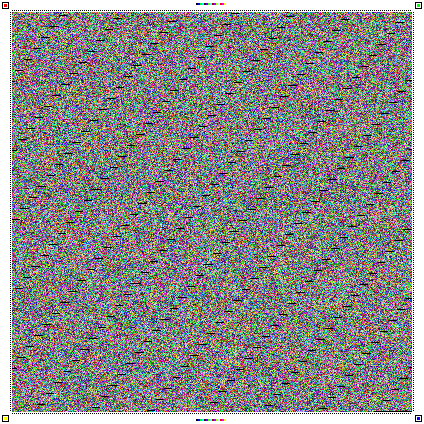
The tested artifact is a 424 × 424 PNG containing 477,468 bytes. Through CVP2 and USL1, it carries a proposed conceptual overview of the Qur’anic body in the retained Rodwell English translation, together with a frozen Carrier state, grammar and selected evidence. Its purpose is to communicate a particular reading that another participant can inspect and answer.
The return archive preserves the full interpretation, code, inputs, outputs and warnings. Our local replay confirms exact packet and text equality and all 48 receiver-authored tests. The complete record is available in the research download.
What was composed
A vocabulary of concepts, arranged into an argument
Before the trial, Lucid Founder reviewed and published 313 Qur’an-related additions: theology and narrative concepts, worship and communal practices, and one limited reading frame for every surah. The experiment pins the resulting snapshot of 759 checked records. Existing reading-method concepts are reused rather than rewritten for a new source.
The atlas selects 247 distinct checked concepts in 267 actual concept-token positions. A reference identifies a particular definition and dictionary head. Lexical forms and literal text supply the surrounding qualifications. That makes the composition more specific than a collection of evocative labels.
The proposed organization connects divine address, created signs, revelation and response with narrative, worship, care, institutions, conflict and final accountability. Its reading methods preserve attribution, genre, translation limits and disagreement. Love & Freedom describes the author’s stance toward the recipient, including freedom to challenge the synthesis; it is not assigned retrospectively to every scriptural instruction.
The edition boundary is explicit. Project Gutenberg #2800 supplies J. M. Rodwell’s English translation and its editorial apparatus. Canonical surah numbers are distinct from Rodwell’s rearranged sequence. A label such as Rodwell S2.P173 locates a printed paragraph in this file; it is not a conventional ayah address. The introduction, preface and notes remain separate from Qur’anic speech.
What arrived
Exact recovery, with evidence that can be followed
The supplied receiver and the separately written Python cross-check recover the same 1,793,696-byte USL1 object and 1,948,008 exact UTF-8 bytes of expression and context. All 267 concept occurrences resolve through the pinned checked tier, at their actual JSON value locations. Finding the same alias elsewhere in a document does not count as a binding.
| Layer | Result |
|---|---|
| Original input | All 14 manifest-listed files match the sender’s bytes; the manifest itself is recorded separately. |
| PNG and RGB24 frame | 424 × 424 pixels; a 400 × 400 data grid. All 179,776 physical pixels checked; unused modules have the required values. |
| Error-code verification | 1,882 Reed–Solomon codewords; all 60,224 syndromes zero. No repair attempted. |
| USL1 contents | 251,397 tokens: 125,431 lexical, 125,699 literal/space and 267 concept occurrences. |
| Source evidence | 799 quotation occurrences across 718 distinct source units; all match the supplied source and index. |
| Receiver tests | 48 tests passed, including expected rejection of deliberately malformed synthetic inputs. |
These checks establish that the composed object arrived intact. Interpretation asks a further question: what did those selected definitions, roles and qualifications communicate to this receiver?
Implementation and network-isolation boundaries
The receiver used the supplied JavaScript recovery path, then wrote a standard-library Python cross-check for image transport, hashes, USL1 parsing, chain links, actual source positions and source evidence. Full Carrier schema, phonetic-codec and allocation-policy validation still used supplied components. This was not a complete independent replacement for every validator.
The receiver reports Python 3.13.5 and Node 22.16.0, with no browsing, agents or outside contact. Its attempted unshare -n true command failed with “Operation not permitted.” A Node preload guard was used, explicitly without claiming OS-level network isolation. The environment failure is preserved separately from artifact checks. The historical LEGACY_ID_HISTORY warning for w3–w9 also remains visible; none of the selected checked references is unresolved.
What the recipient understood
Guidance answered through conduct and shared life
The receiver reads the atlas as guidance demanding a response through worship, conduct and communal life, accompanied by a discipline for retaining conditions and difficulties. It follows the relationships among the selections, rather than substituting a generic summary of the Qur’an.
Divine unity, mercy, nearness and accountability remain attributed theological portrayals. Narratives keep their particular features: an unnamed son in the selected sacrifice scene, requested help in Moses’ commission, Mary’s vulnerability, signs by divine permission, and inquiry before Joseph’s release. Familiar names do not make the accounts interchangeable with another scriptural tradition.
The reading also preserves distinctions within practical life. Postponing a debt is not identical to cancelling it. Giving can be damaged by reproach. Worship’s ethical purpose does not abolish bodily instructions. Shared moral enumeration does not erase unequal institutional roles. Hope and severe judgment remain present together.
Our comparison finds a substantive, qualified reading. It does not assign a universal semantic-accuracy percentage. Four rubric areas are partly preserved in the prose: conduct as trial, details of the Moses narratives, the pilgrimage setting, and the tranquil soul’s return. Their definitions were recovered, but recovery alone does not demonstrate that every detail was independently expressed or understood. Likewise, a generated aid containing all 114 frames is not evidence of 114 separately demonstrated acts of interpretation. The archived complete receiver return makes that distinction inspectable.
A distinction preserved
Noncompulsion and coercive address remain visible together
Noncompulsion in the religious address
Bound to the left side of the third explicit comparison, with evidence at Rodwell S2.P257.
Coercion in the Immunity announcement
Bound to its right side, with the severe address at Rodwell S9.P5 retained alongside context.
The receiver does not let either selection remove the other. It also identifies the separately selected treaty exception and asylum provision—checked/632 and checked/634—so the severe address is not detached from its surrounding qualifications.
The grammar does not decide abrogation, contradiction or reconciliation automatically. Preserving an interpretive problem is a communicative result; resolving it would require a further argument. These are edition-specific references, not a ruling about present-day practice or a generalization about Muslims.
Two authored alternatives
The same paragraph can support different priorities
The earlier Bible-atlas receiver asked for competing readings to become actual structured objects. This Qur’an atlas takes a step in that direction: it includes two organizing emphases for Surah 2, each with selected concepts, reasons, source paragraphs and limits. They are authored proposals, not attributed schools of exegesis.
Formation through guidance
Foregrounds worship, generosity, debt accommodation and reliable obligations. It risks underweighting communal boundaries, unequal roles and coercion.
Boundaries and regulated difference
Foregrounds orientation, differentiated obligations and regulated conflict. It risks underweighting prayer, gratitude, practical care and the invitation to guidance.
The recipient compares both rather than forcing them into opposites. Their shared anchor, S2.P173, joins belief, giving, prayer, promises and endurance while refusing to make outward direction exhaustive. P283 is a particularly revealing test: the same paragraph supports documentary protection and differentiated witnessing. Both emphases can point to real wording; counting references cannot determine which explains the surah better.
The receiver asks which organization better accounts for transitions, exceptions and prayer while leaving less unexplained. That is a response to the composition’s interpretive invitation, not an error caused by failing to agree.
The reply adds a question
Who can claim inherited religious standing?
The receiver challenges the relative underweighting, within both alternatives, of inherited scriptural authority and assured religious standing. Earlier revelation and Abraham are present in the wider atlas. The criticism is that neither alternative develops this dispute as a central organizing question.
It follows the included source beyond the selected quotations:
| Rodwell locator | Proposed relevance |
|---|---|
| S2.P60 | Names several communities while relating reward to belief and conduct. |
| S2.P106–P108 | Challenges exclusive entitlement and records rival scriptural readers’ reciprocal denials. |
| S2.P135–P136 | Contests assigning ancestors to later communal labels and distinguishes their deeds from present hearers’ deeds. |
These six paragraphs are absent from the 799 carried quotation occurrences. They come from the full source already included in the kit. Their wording and byte spans check against that source. They are additional evidence used in a reply, not new concept references recovered from the PNG.
How does the surah claim continuity with earlier revelation while contesting inherited ownership of its promises?
A concise paraphrase of the receiver’s proposed next question.
This proposal does not establish that every belief is equally affirmed: the passages retain theological criteria and disputes. It offers a question for a possible third frame. No new frame, dictionary entry or subsequent trial has been created merely by publishing this result.
Why this matters for USL
An exact reference can support an open disagreement
The achievement combines three observations. The bytes arrived intact. The recipient produced a connected account of the selected conceptual structure. It then offered a source-based challenge whose relationship to the original selections can be examined.
The full source made a concrete difference. In the earlier Bible trial, the receiver could not compare quotations with the complete retained TXT because it was not supplied. Here it was included from the outset. That supported both complete checking of the carried quotations and a reply that reached beyond them.
This illustrates the expressive direction of USL: shared concepts help make an author’s choices durable enough for another participant to understand, compare and question. Agreement is not the only useful outcome. A disagreement that points to exact definitions, roles and source passages can be a more informative reply than an untraceable impression.
It remains one contextual receiving session. The model label is self-reported; prior discussion could influence the reading. A fresh conversation, another receiving system and explicit comparison criteria would provide further evidence. Local replays strengthen reproducibility but do not substitute for those additional semantic trials.
Preserve the boundary
What the small image carries
The PNG transports a structured overview and context, compressed before framing. The 413,916-byte application gzip stream reconstructs the 1,793,696-byte USL1 object. The image file also contains transport framing and error-code redundancy. Its size is not a compression ratio for the complete Qur’an.
The retained English TXT, complete source index and frozen lexical data are separate parts of the input kit. Arabic translation adequacy, historical claims, theological truth and exhaustive interpretation were not established by recovery. Stored RGB values were decoded from the original digital file; photography, resized copies and general error repair were not tested.
Exact artifact hashes
Original PNG0d5f141c5fa126f77d0a5a2f29c064e8838904e39e1be62f08b73827338ec7ee
Recovered USL1dff3f13d67d07020a8de5f456ca565ec31c67af4a918190d798dc3e20550a348
Exact expanded UTF-8 expression99748590b0e38af8f18f22e31f664a7cecc0713c5e8406687392ea77e95b8fff
Pretty-printed derived JSON may have a different hash without changing its parsed data. The exact expanded file is the byte-preservation comparison.
Open research record
Read, reproduce, and form your own assessment
Original receiver kit — the test input, source dependencies and supplied reference tools.
Unchanged receiver return — interpretation, recovered artifacts, independent cross-check, 48 tests, logs and warnings.
Complete research record — sender reading and rubric, original archives, publication evidence and local technical/semantic audits.
Plain-text results · Machine-readable results · Original PNG
The research record contains the sender’s interpretation; withhold it when preparing another initial receiving trial. Use the original receiver kit and record the actual model, inputs, prior context, hints and corrections.
The next contribution can be a criticism, a better-supported frame, or a new test. What matters is that the path from reference to interpretation remains available to the next reader.