Unified State Language · A new atlas to explore
The Tanakh, with its own voice
A shared language becomes more useful when it can carry a reading without making the source’s differences disappear. The Tanakh atlas is now ready to explore through checked Carrier concepts, exact source quotations, and three open questions about belonging.
Open the interactive Tanakh atlas →
The source is the Hebrew Bible in English in the retained JPS1917 edition distributed by Mechon Mamre. The atlas follows its three divisions—Torah, Prophets, and Writings—and provides 24 navigational frames for 39 separately cited component books. In this archive, Chronicles opens the Writings and Ezra–Nehemiah closes them. That arrangement belongs to this witness; it is not presented as the only Jewish ordering.
A vocabulary that can hold distinctions
The enrichment added 88 thematic concepts and 24 group frames to Carrier. Earlier concepts remain useful too: the atlas brings 79 existing textual concepts into explicit, separately identified applications to this edition, alongside its authorial principles and reading methods.
The new vocabulary makes room for details a broad summary can easily lose. Rebekah is asked whether she will depart. Tamar’s identifying tokens expose a responsibility hidden behind an accusation. Judah offers himself in his brother’s place. Joseph’s provision during famine preserves life while concentrating Egyptian land and service under Pharaoh. The atlas can point to each of those distinctions without requiring one to cancel another.
Elsewhere, a necessary covering must be returned before night; an adversary’s burdened animal still calls for help; a worker’s poverty makes delayed wages consequential. Yet these protections are read alongside institutions that retain unequal status and coercion. The method does not make a limited restraint say more than its source says.
A witness is more than a familiar title
Using a new edition required reading its actual wording and verse labels. JPS1917 Daniel 3:17 begins conditionally: “If our God whom we serve is able to deliver us”. The atlas preserves that wording beside the refusal in the next verse, without silently substituting a stronger formulation from memory or deciding its theological implication in advance.
The same care applies to Psalm headings, source numbering, and particular renderings. A reference identifies this retained passage; it does not establish that another translation says exactly the same thing. The original files, translated wording, editorial presentation, concept definitions, source applications, and the authored synthesis remain distinguishable.
Three ways to ask how belonging is formed
The atlas offers three overlapping organizing emphases. One begins with received life and practical obligation: remembered dependence becoming care for another person. A second foregrounds covenant distinction and regulated membership: named allegiance, transmitted instruction, and differentiated access. A third asks how inherited arrangements meet claimants, displaced voices, and renewed recognition.
All three return to the same stranger passage in Leviticus 19. Each explains something, and each names what it can leave less visible. These are the author’s hypotheses, not three named schools of Jewish interpretation or an exhaustive set of choices. Readers can follow their evidence, compare their priorities, and propose a further passage that would challenge them.
The image carries the structured proposal
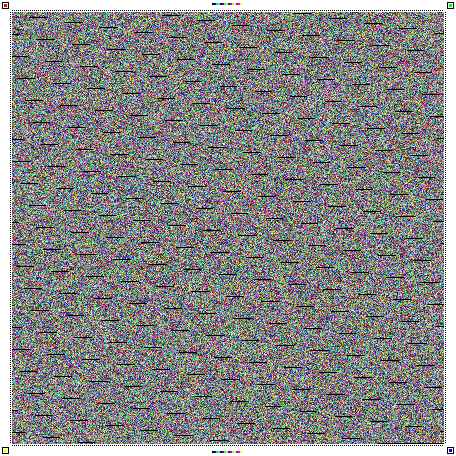
Download the original PNG. Use the original file for decoding.
The final USL1 expression invokes 220 distinct checked concepts in 253 actual positions. CVP2 carries that expression through exact RGB24 values. Its compact image represents a structured overview with conceptual context and selected evidence; it is not the complete scripture compressed into a picture.
Local recovery reproduced the packet and expanded expression exactly, including 675 quotation occurrences. The retained source’s 23,202 indexed verse units also agree with their chapter-copy counterparts within the same archive. These are useful checks of the artifact and its source correspondence. They do not prove theological truth, translation adequacy, completeness, or agreement between readers.
The vocabulary is checked; the interpretation remains open. The atlas’s 191 source applications are separately identified associations. A checked concept does not automatically certify every use made of it, and an exact recovered expression does not compel assent.
Explore first—or preserve a fresh experiment
The standalone page includes the sender’s English reading, fourteen thematic facets, eight explicit comparisons, all 24 group frames, and the definitions and quotations behind its selections. Search for a book, concept, or phrase; open a reference; inspect what was carried; follow the path back to the frozen source catalog.
A separate receiver kit is ready for the next interpretation trial. No new external receiving result is claimed here. Anyone helping run a fresh trial should keep this public sender’s reading away from the receiving conversation until its answer is recorded.
For everyone else, the invitation is direct: read the proposed connection, open its evidence, and tell us what another view brings into focus. Shared vocabulary is valuable when it gives disagreement a more precise place to begin.
Explore the atlas and its sources →
Composed for Lucid Founder · Unified State Language.
Sources and record: Mechon Mamre downloads · frozen atlas source catalog · edition index · exact retained source archive.
The original archive’s notices are preserved. The complete Mechon Mamre HTML archive is not relabelled as public domain.