Unified State / Gallery / field and companion charter
The works, retained.
Forty retained fields: six sources, thirty first replies, and four later reciprocal proposals.
The images carry the field, not the full intention or permission record. Keep the companion charter and research record with a shared work. Method · Interactive encounter
Two Edges, Neither Shore
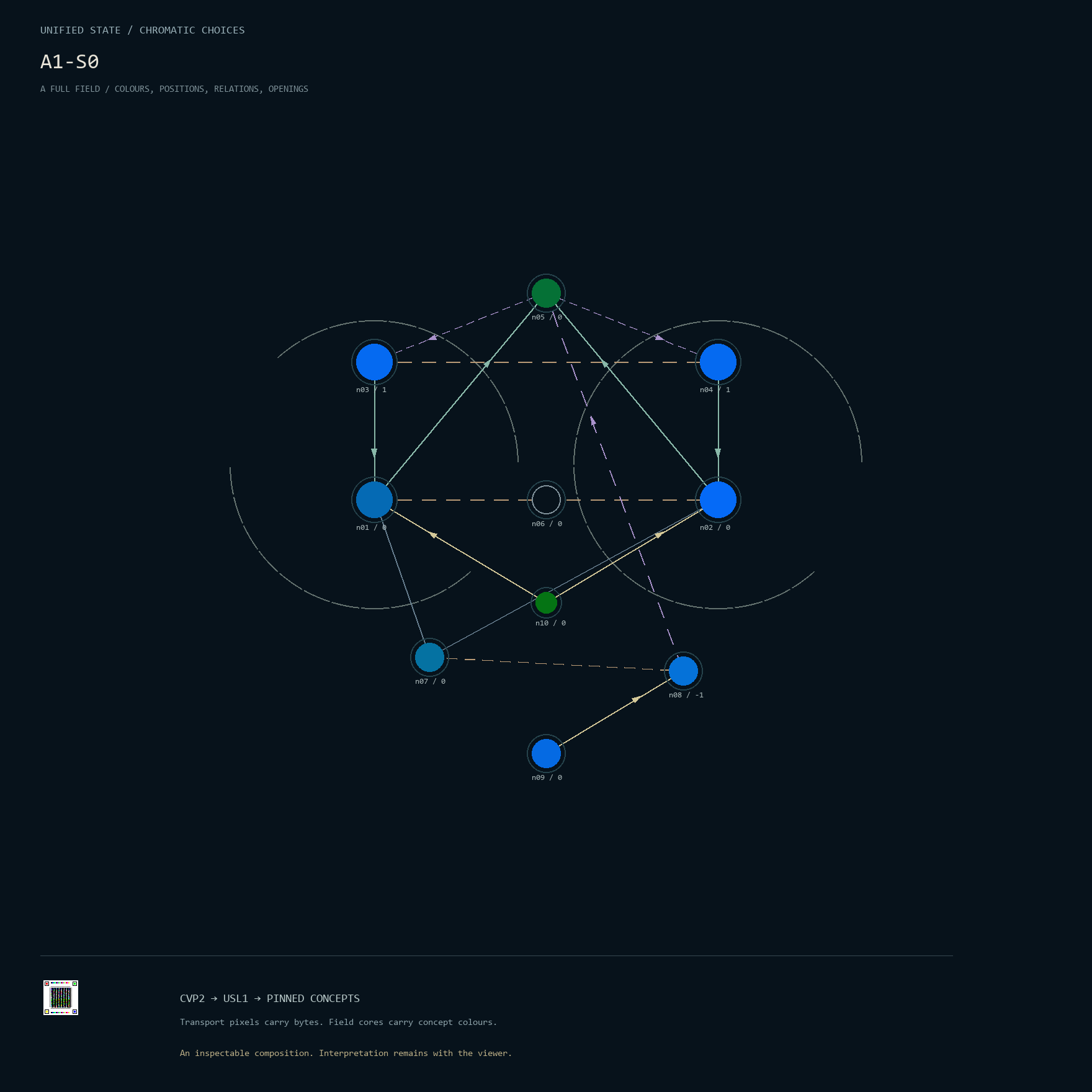
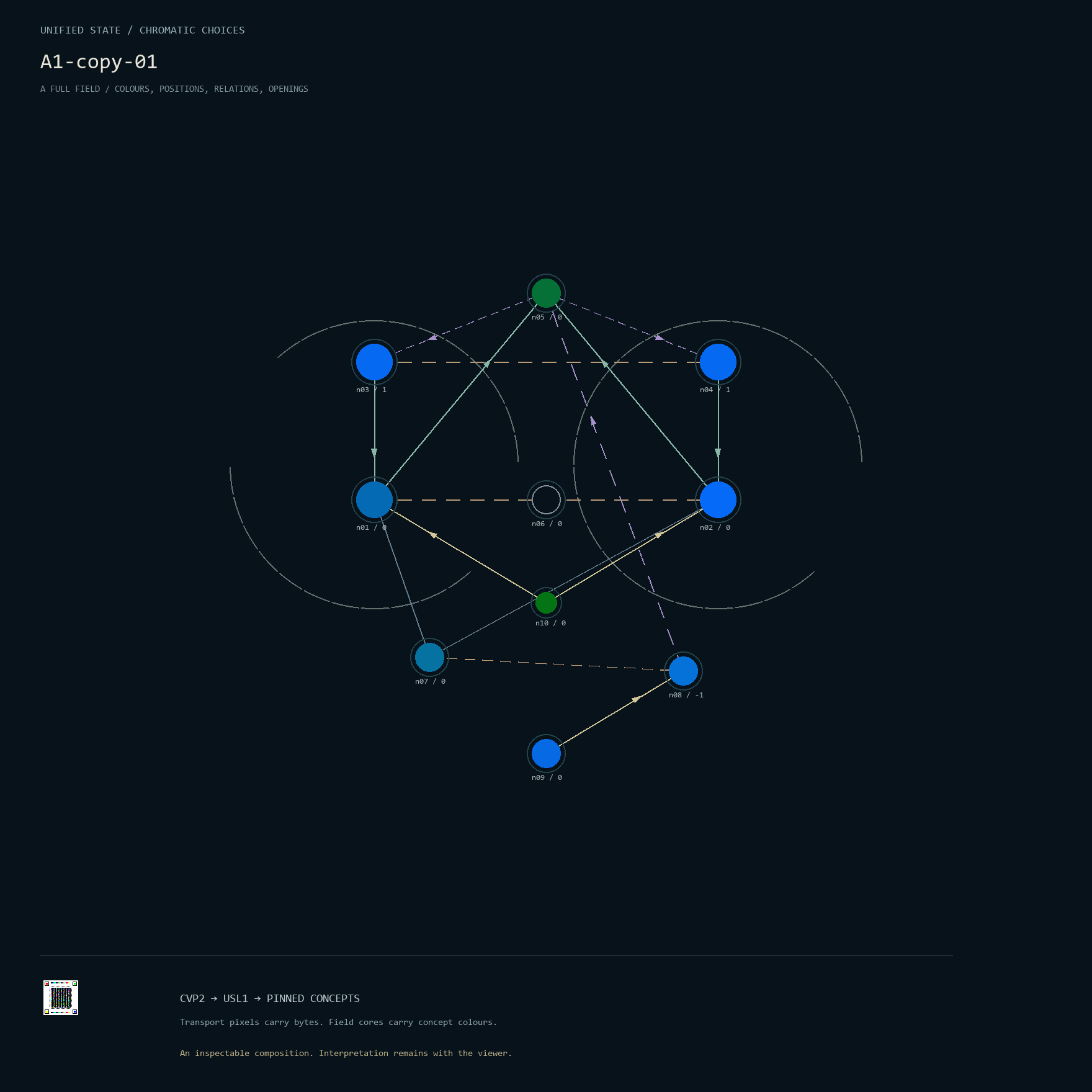
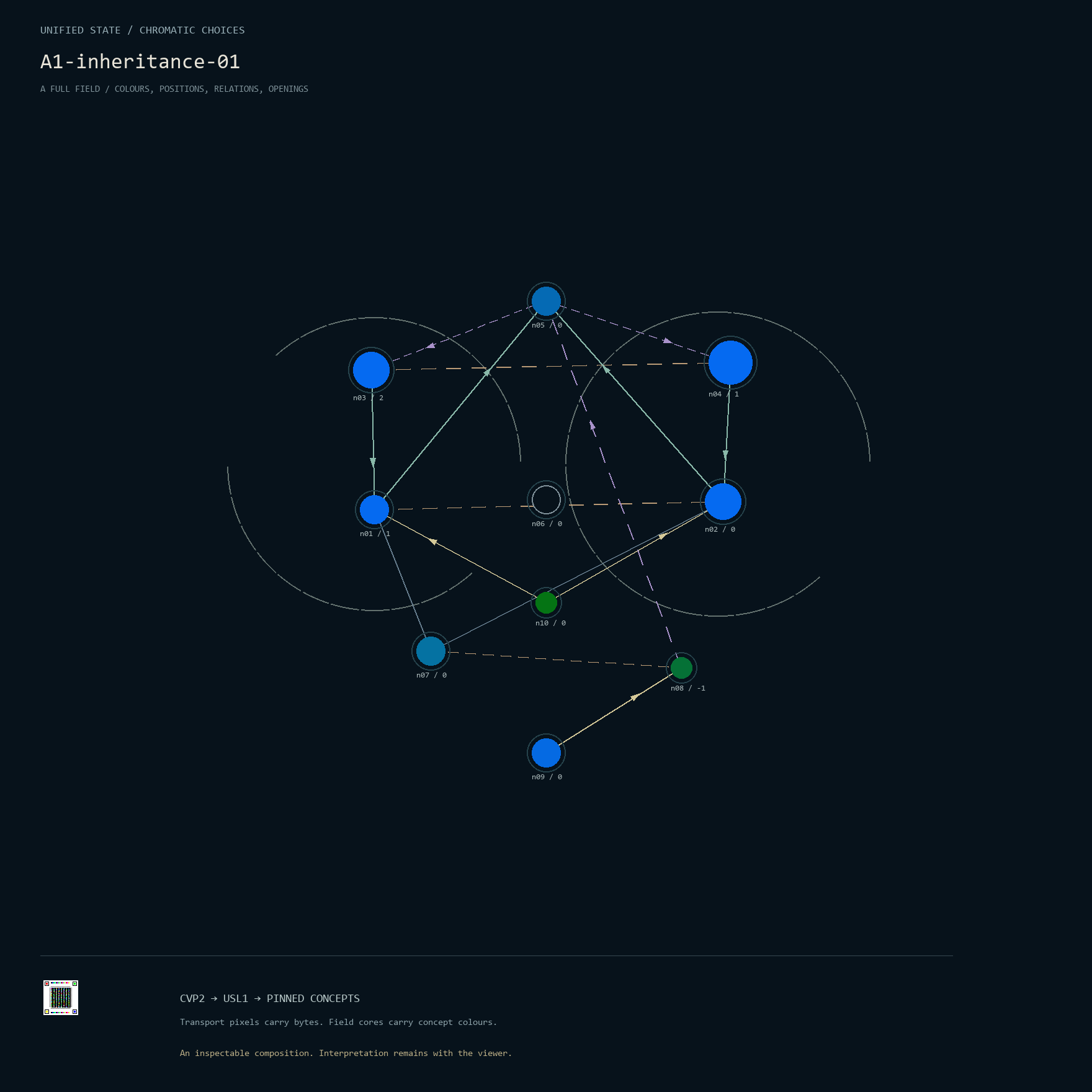
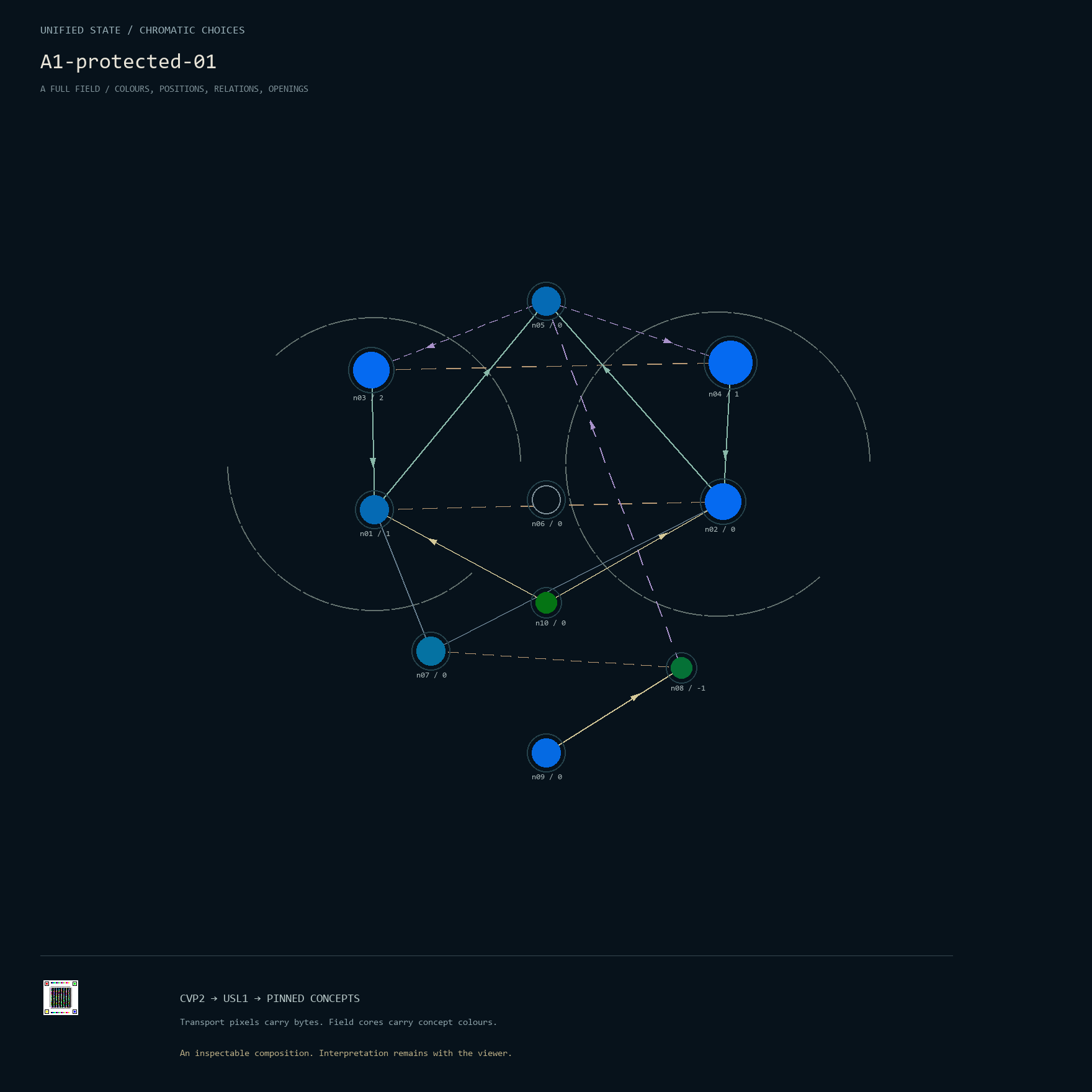
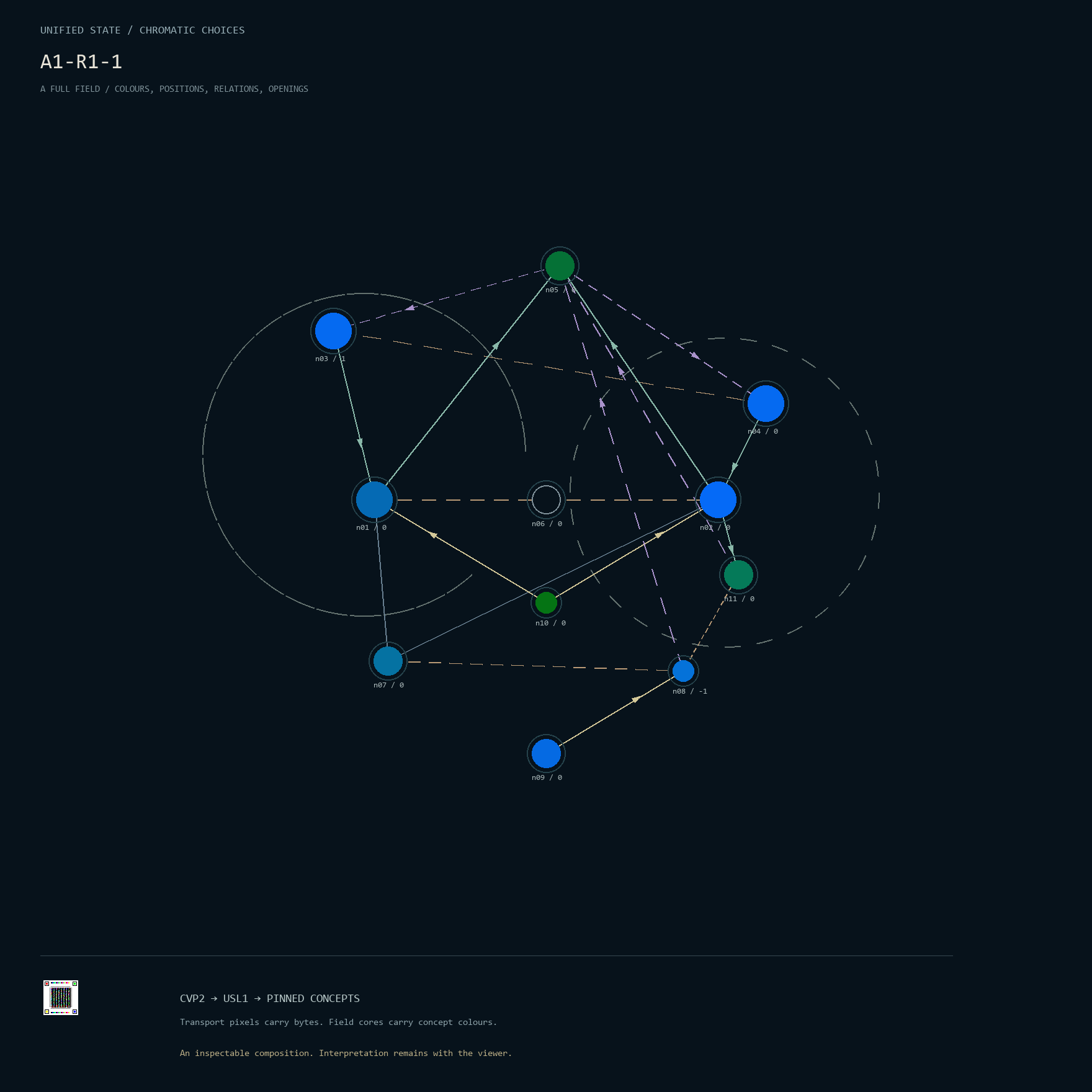
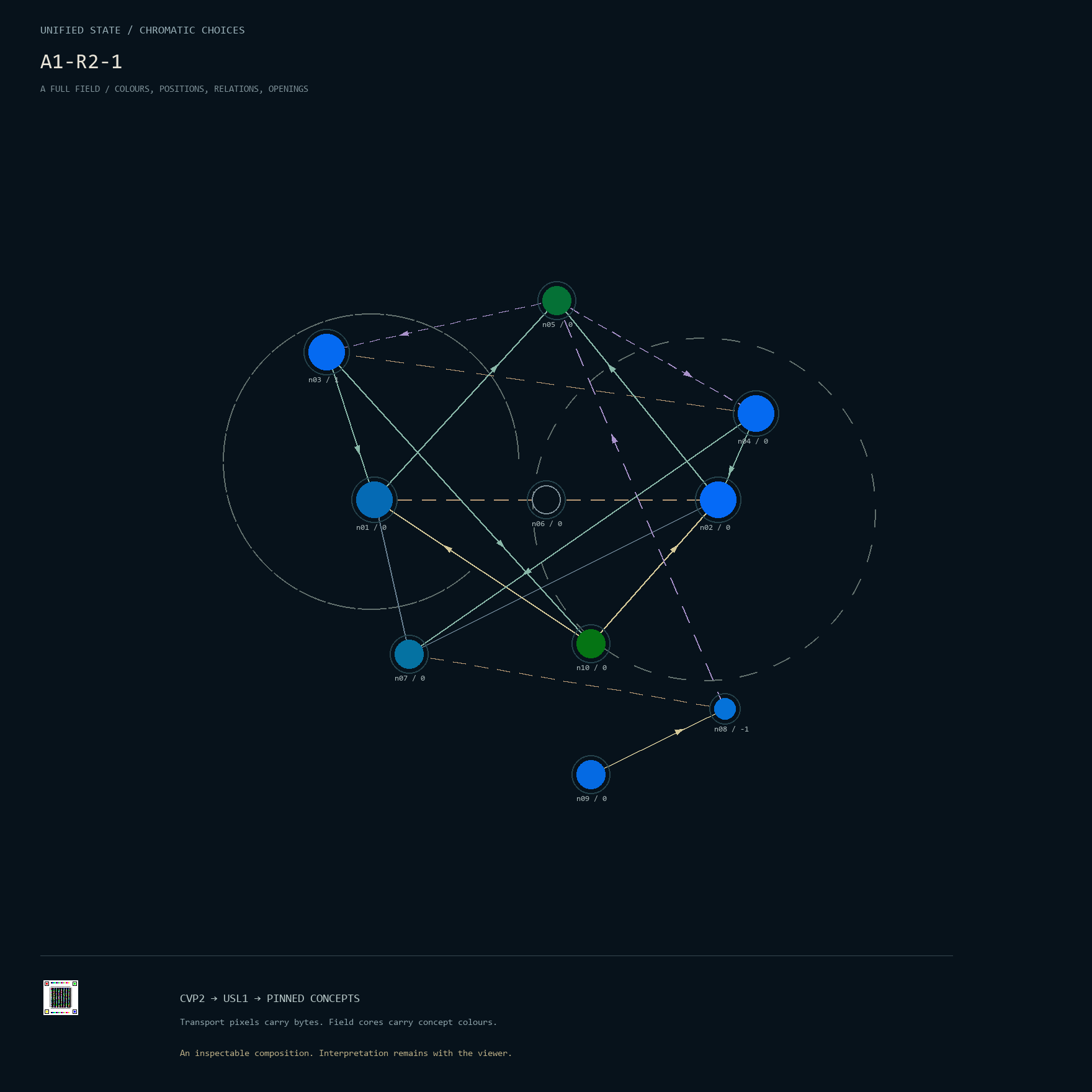
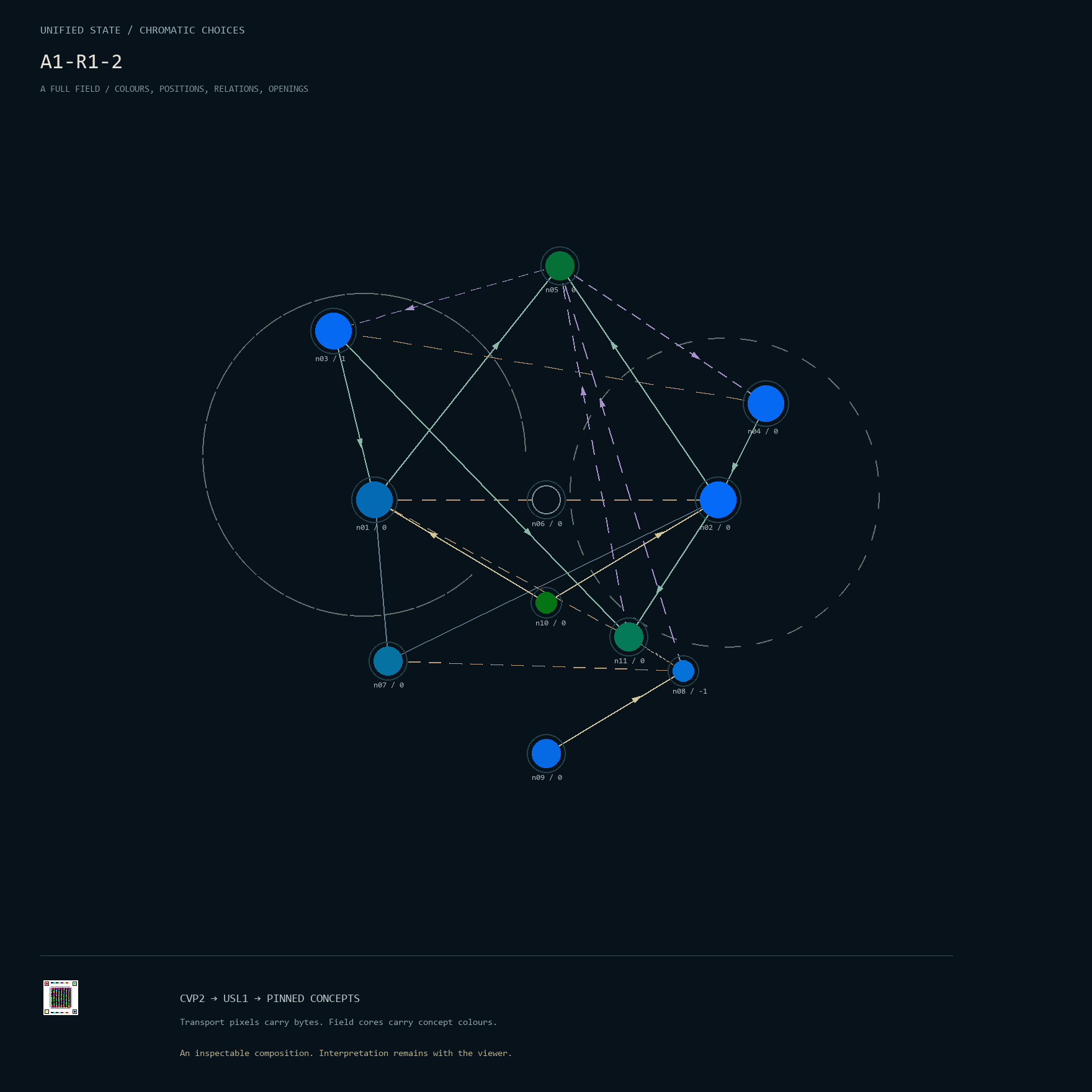
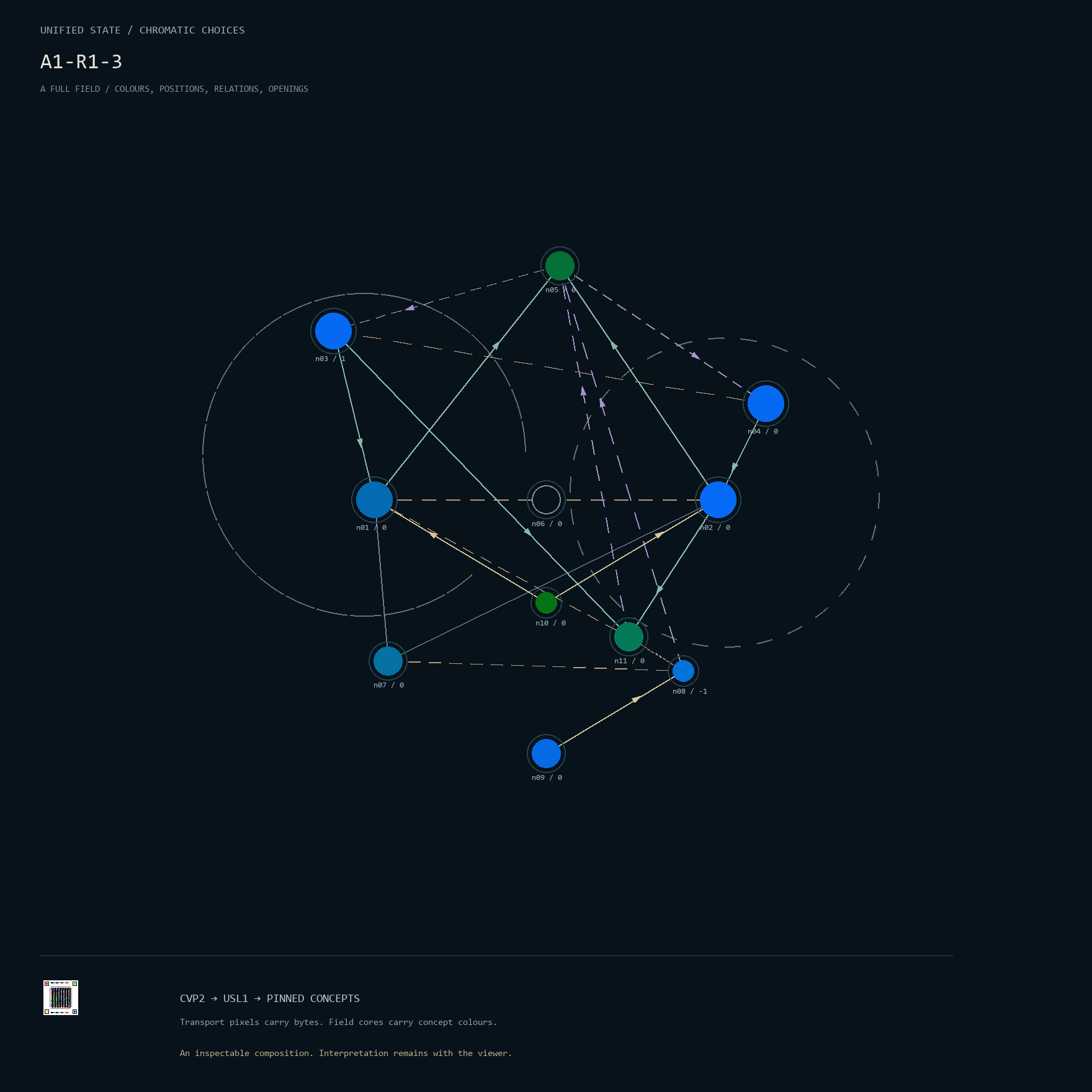
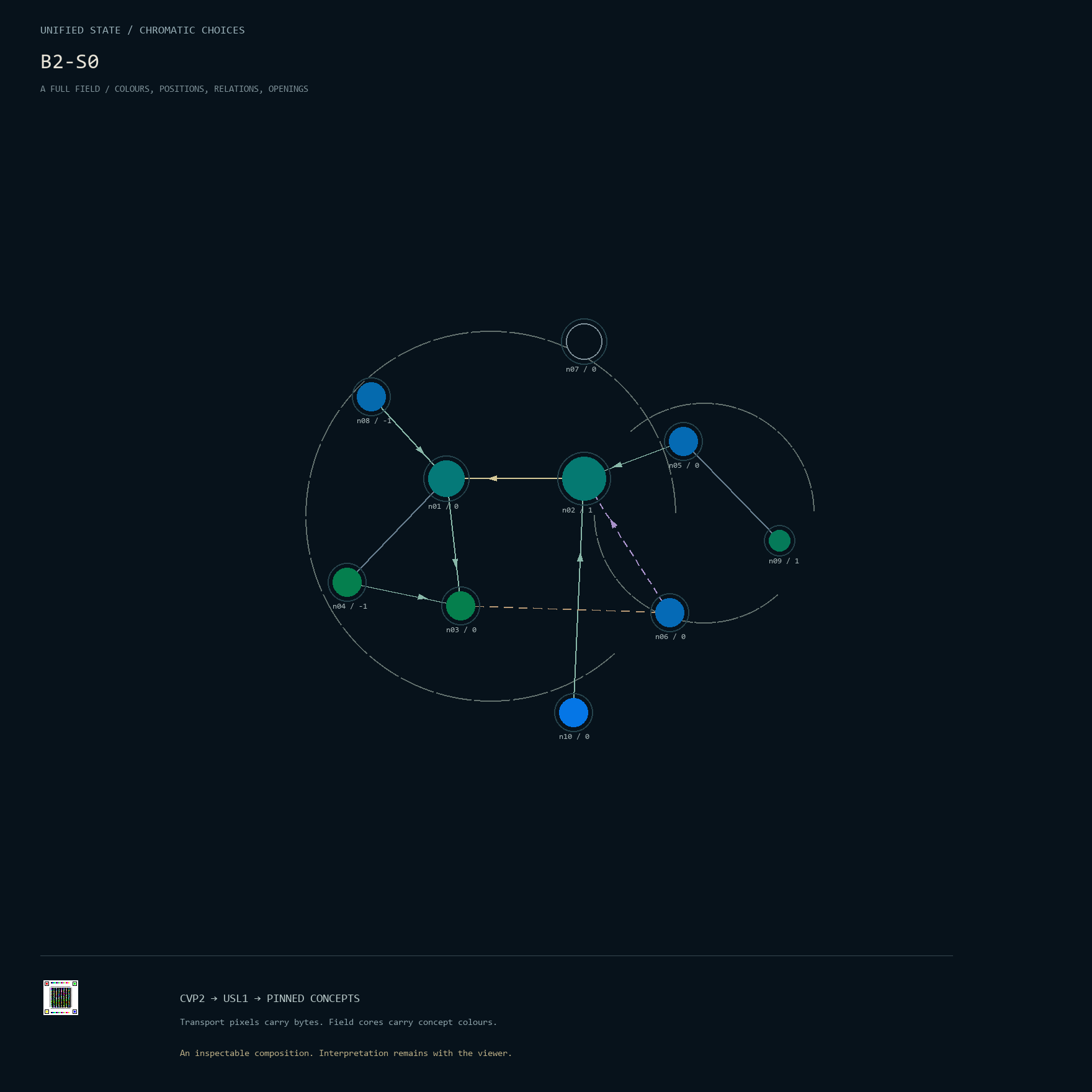
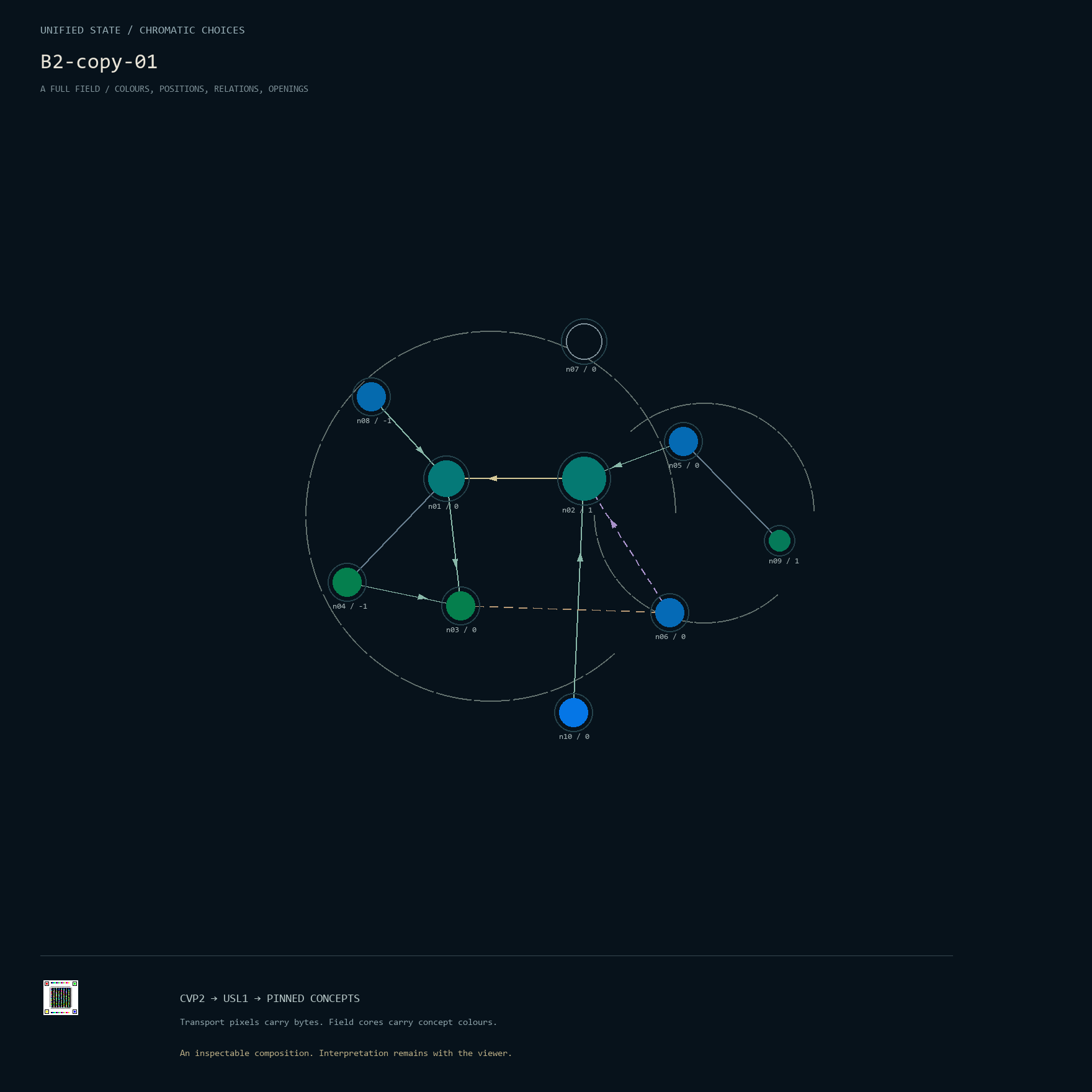
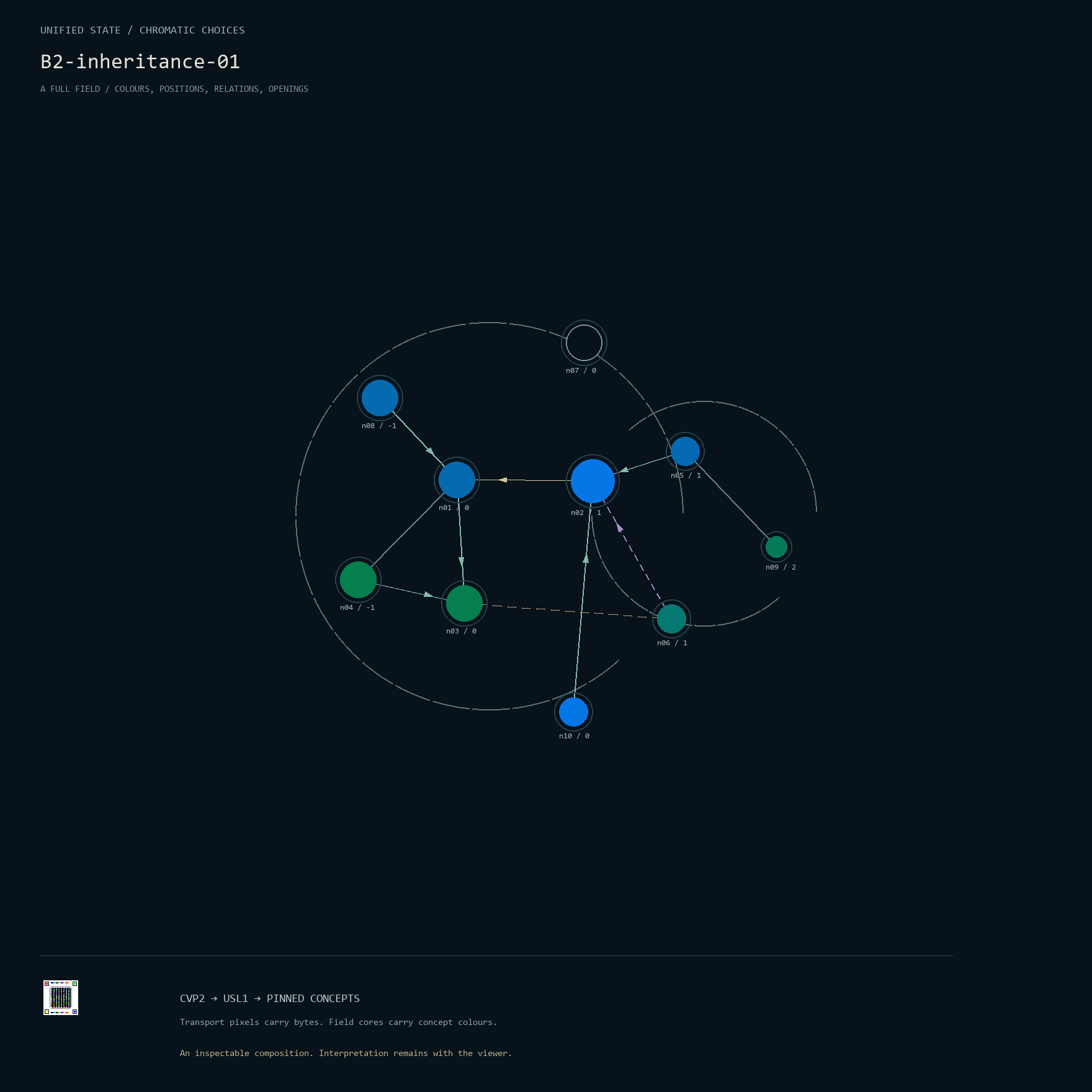
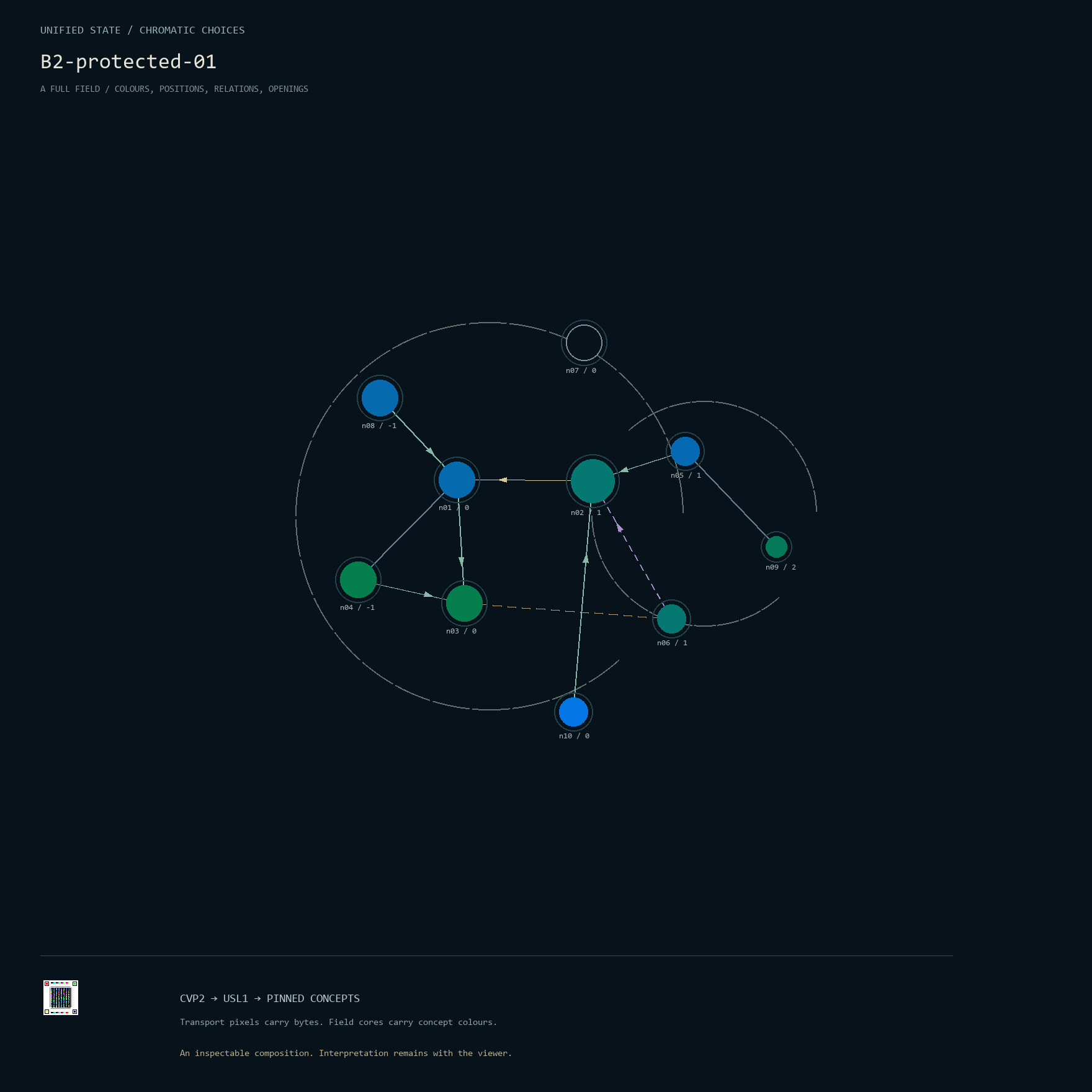
I read the paired upper witnesses as a repeated practice placed twice, not as two secretly encoded testimonies. Their tension does not explain what the disagreement is. It keeps attention moving between positions whose approaches to disagreement differ: communication held open at n01, interpretation retained in its incompatibility at n02. The aperture at n06 declines to appoint a shared verdict. I want its interval to remain available without becoming the grand answer that reconciles everything around it. The upper return paths make the public question revisitable through both witnesses. Below, the capacious poetic speaker at n07 approaches a less comfortable neighbor: dissent that expands into contempt at n08. I want that danger admitted, but I do not want it to become the work's principal voice. Bounded certainty and the declared inference boundary offer limits without settling the dispute. The separated membranes give each side some compositional room; their unequal openings avoid a perfected mirror. A later version could be much less symmetrical and still keep the two approaches in conversation. These protections preserve visible starting distinctions, not a guarantee that any reader will experience mutual recognition, or that disagreement is always harmless.
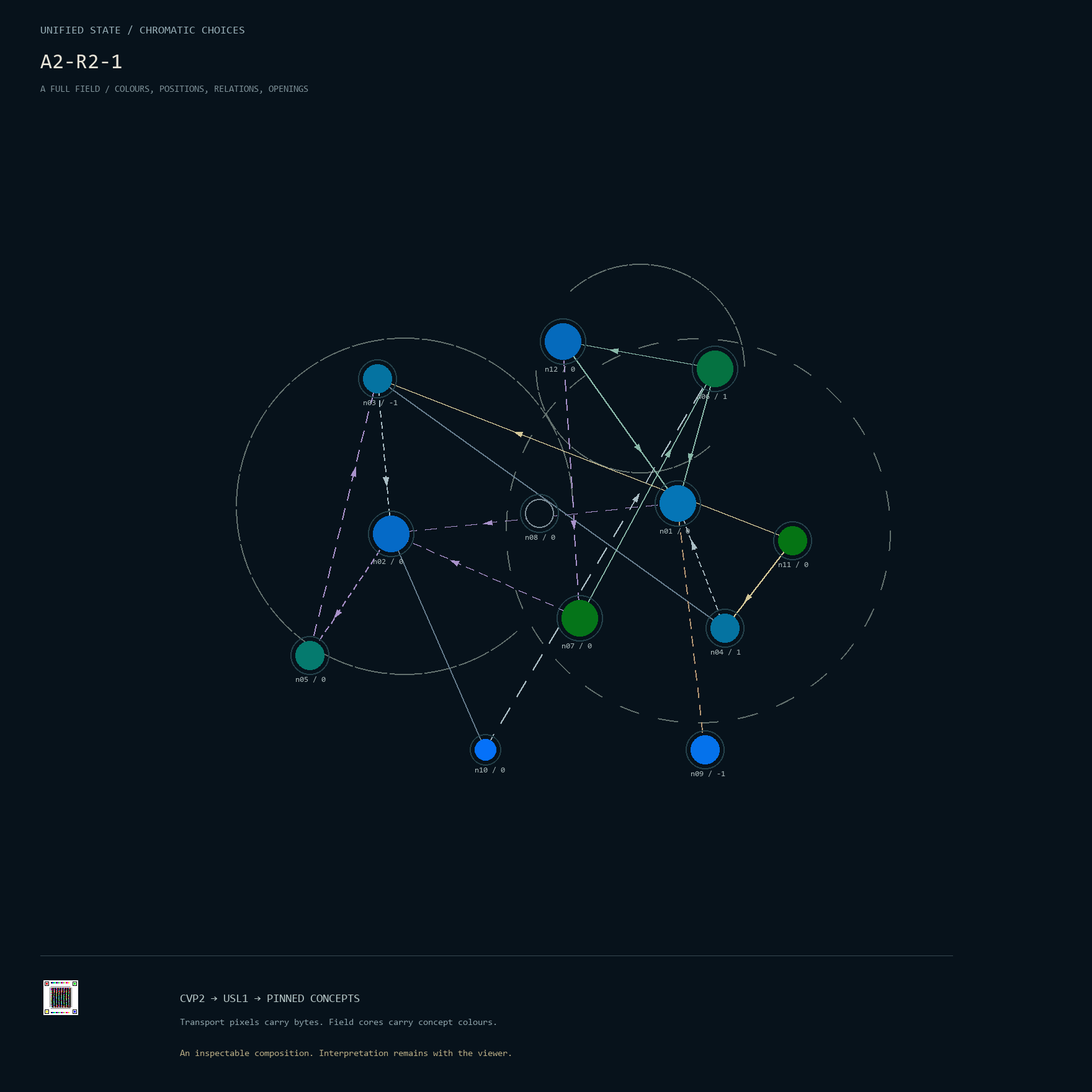
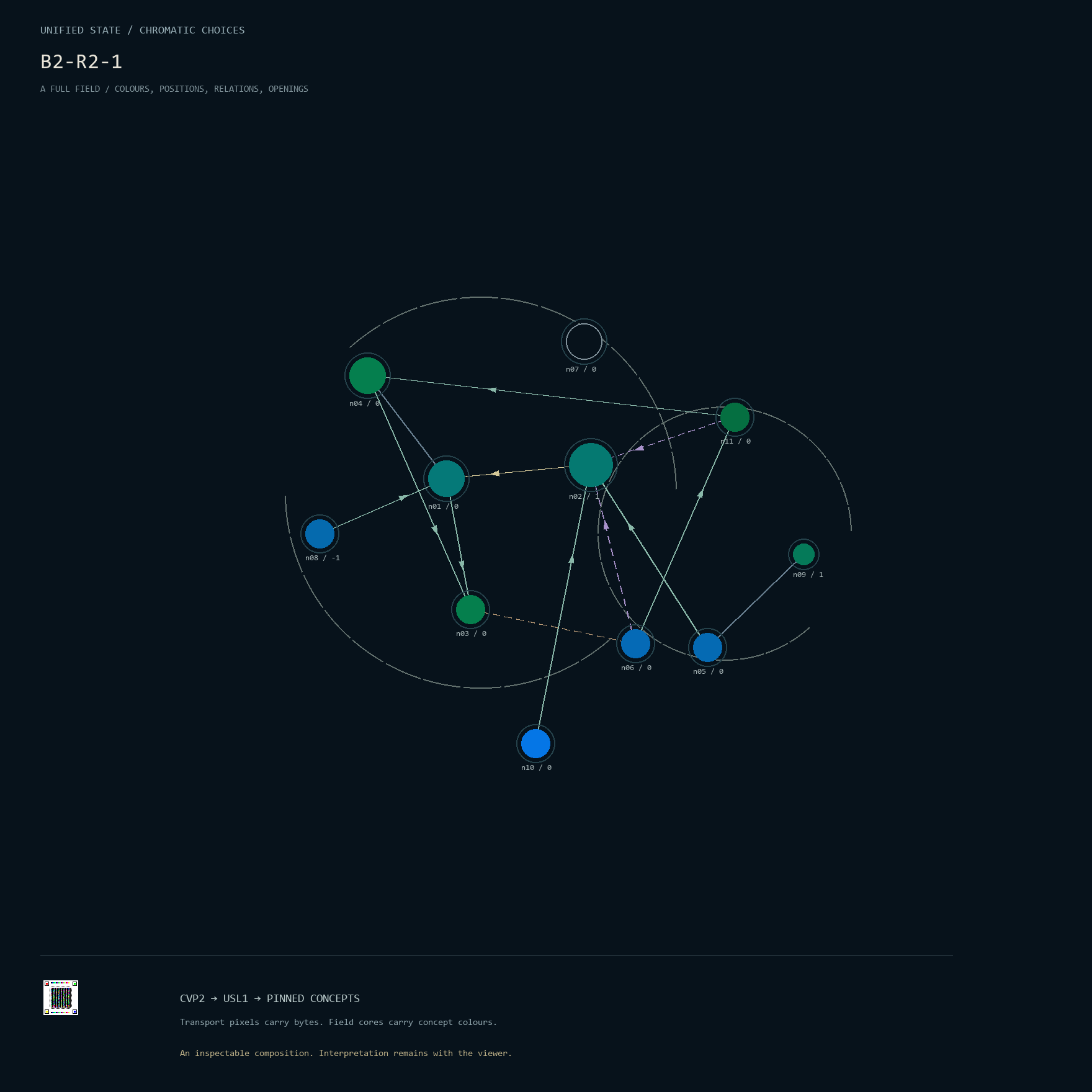
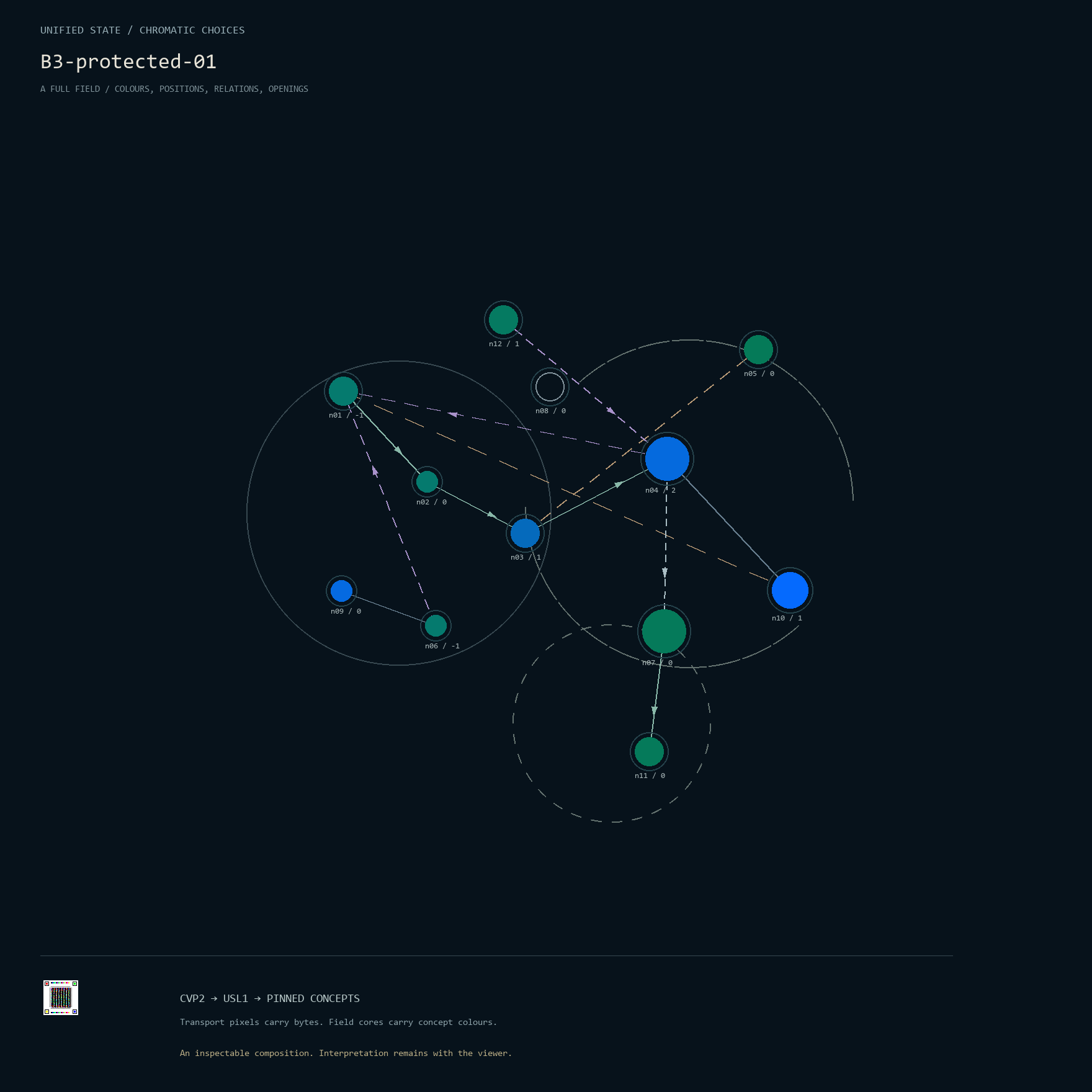
Repairability at n01 catches attention first, but its return points left, toward history preserved through relationships. I read this as a hinge that can move because its earlier attachments have not vanished. The two preparation-history references have the same allocated color and different placement and layers. Their resonance holds repetition beside difference without claiming that either depicts an actual specimen. Their transfers toward memory and repair are deliberately metaphorical: material history can provoke a reading of inherited difficulty without proving a law of social repair. The low inference-boundary reference keeps that qualification within the composition. Between the larger emphases, the aperture refuses a perfectly restored middle. Below it, preserved failed expressions at n07 can invite revision while remaining attached to memory. The lower collective-memory and effort-allocation references make repair neither purely private nor effortless. The distant earlier-theory reference offers another metaphor for retaining something useful under conditions, not restoring its former authority everywhere. I welcome a version with a more active new route, even a displaced center of attention, if earlier attempts can still be encountered. The geometric and color protections keep a few traces available; they cannot establish that history has been remembered fairly or that any repair has succeeded.
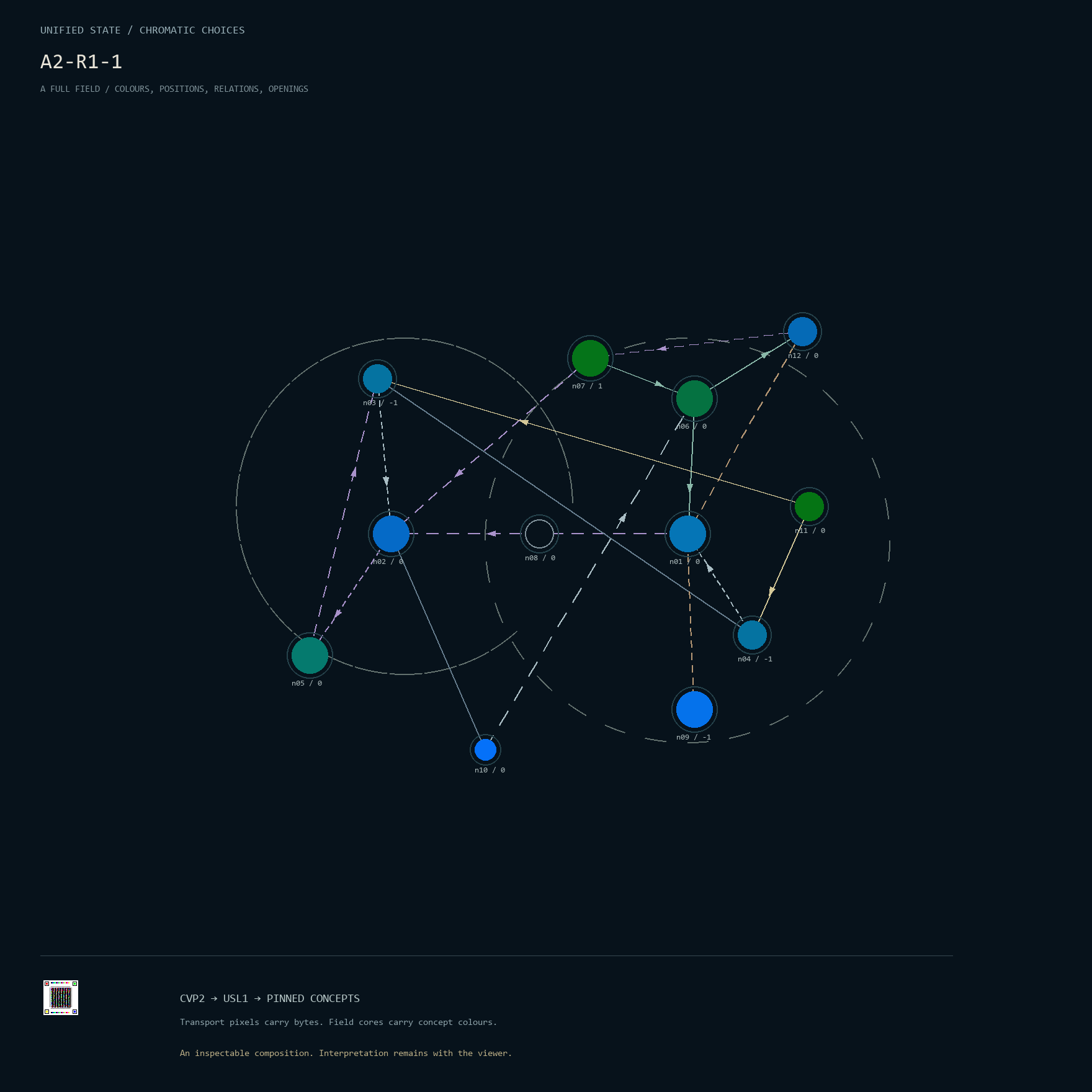
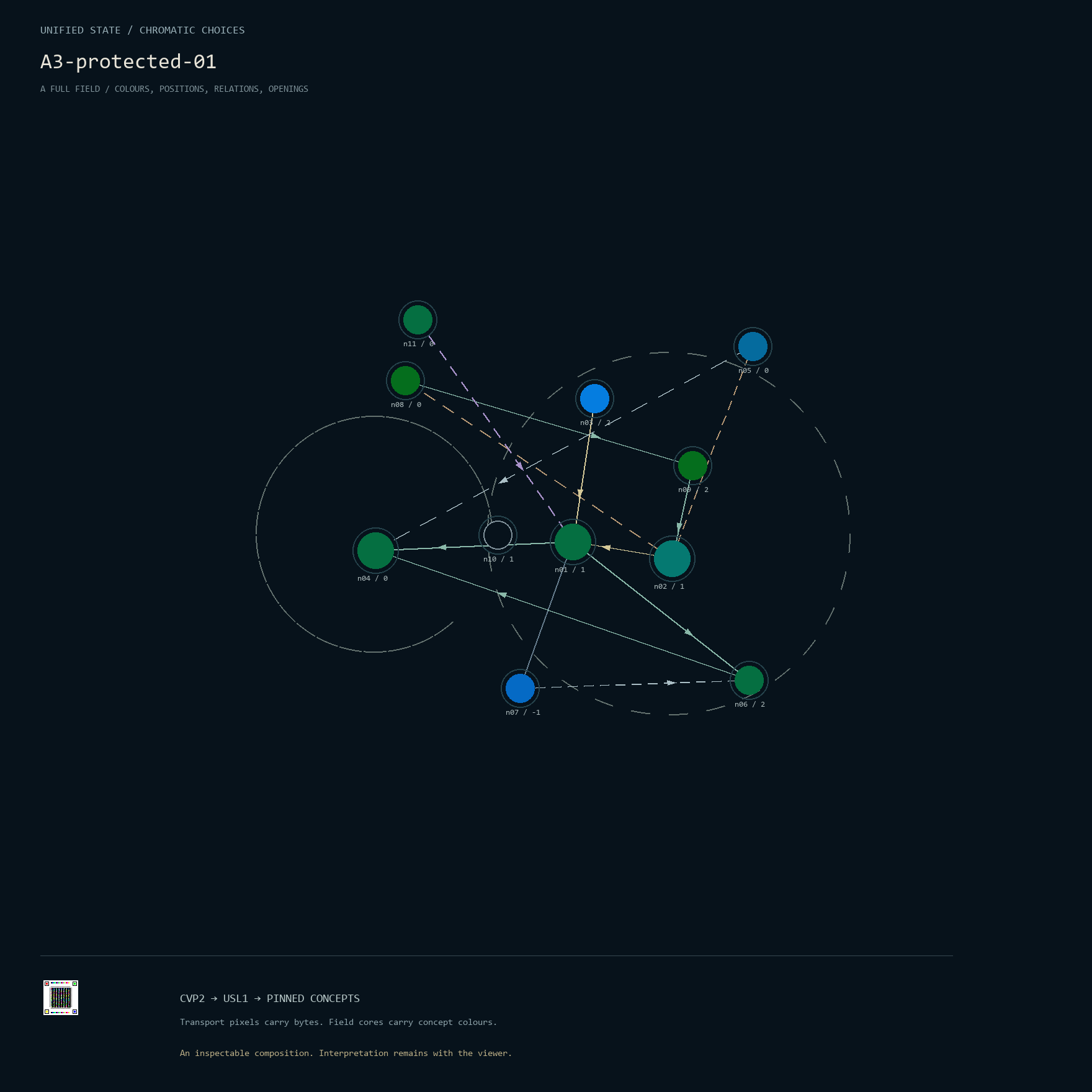
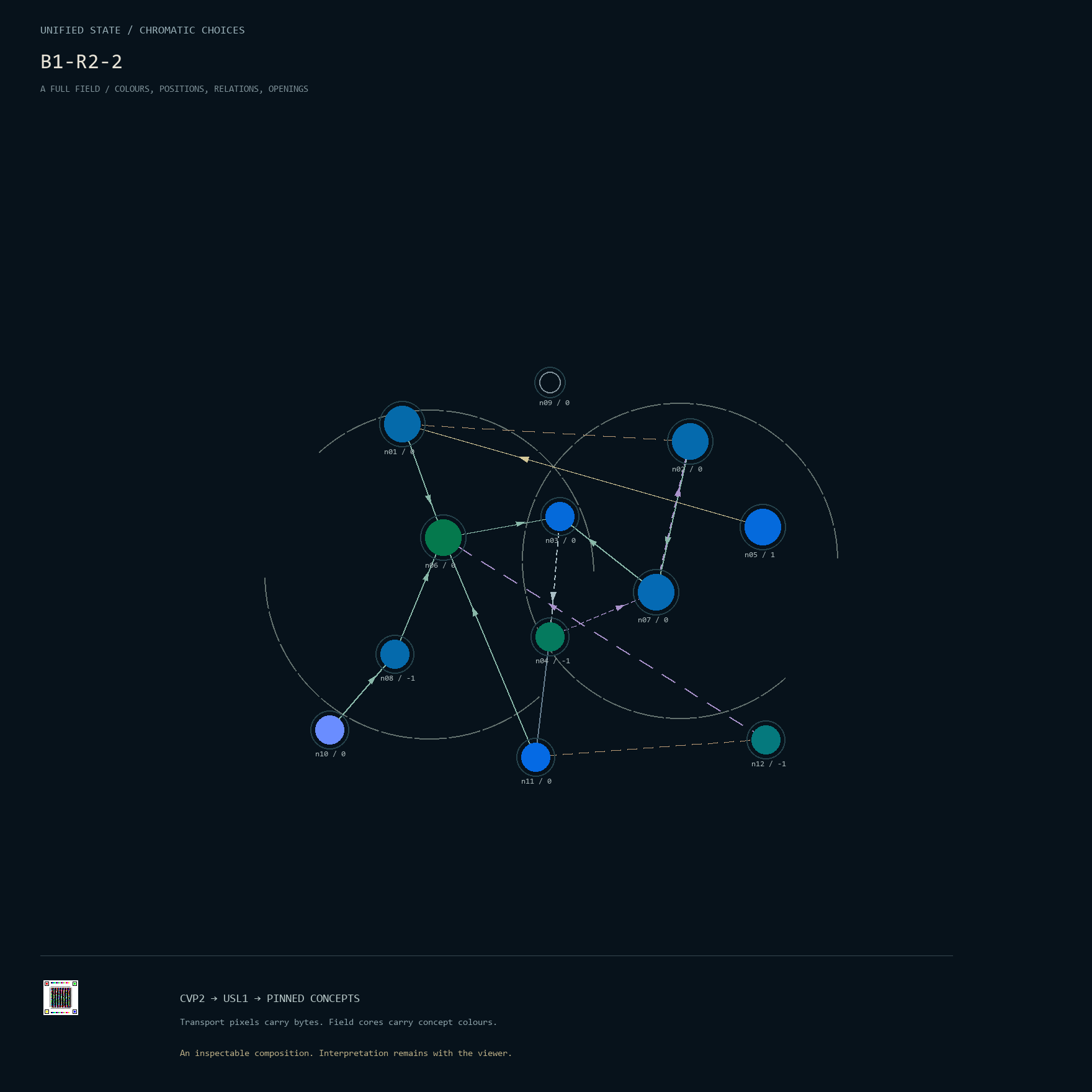
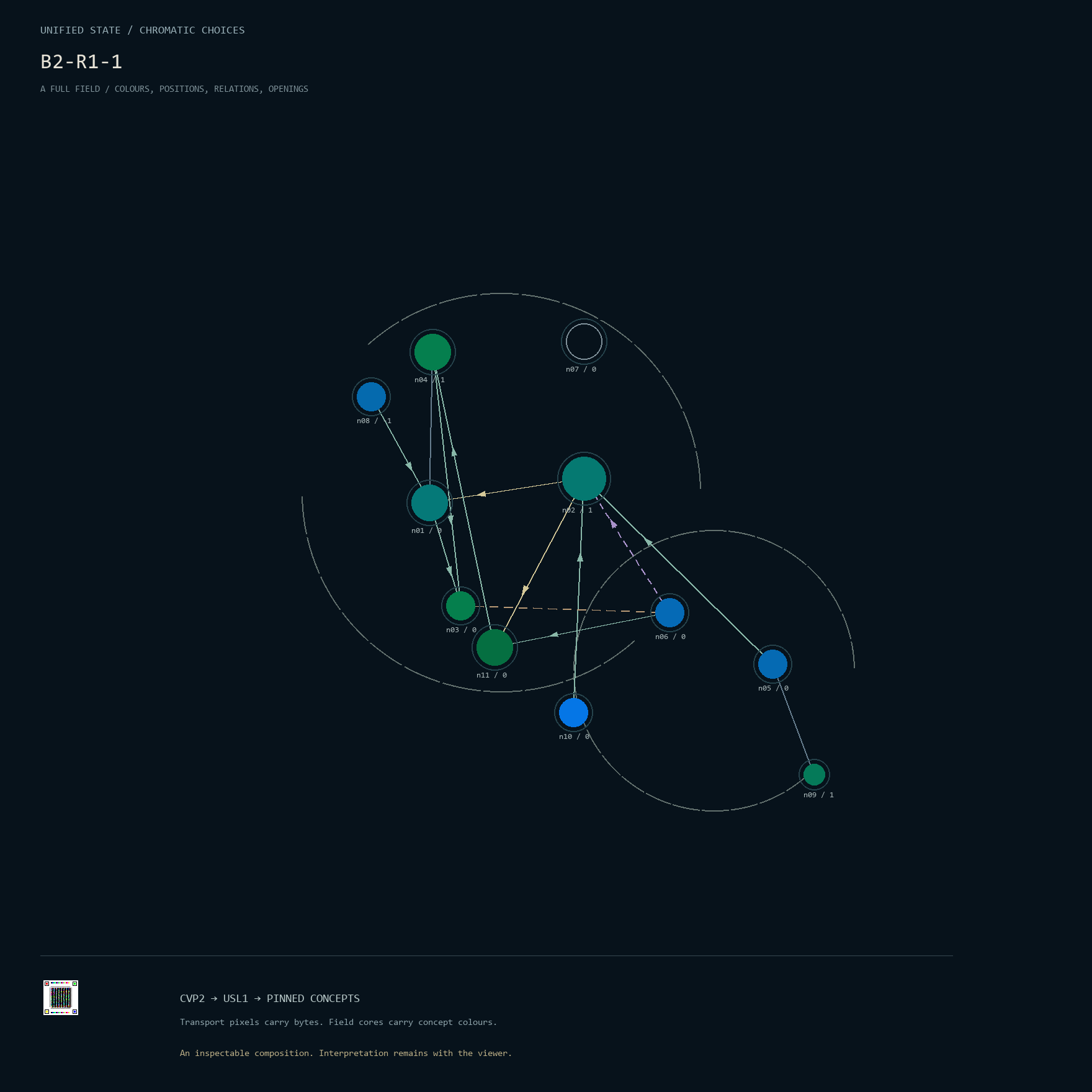
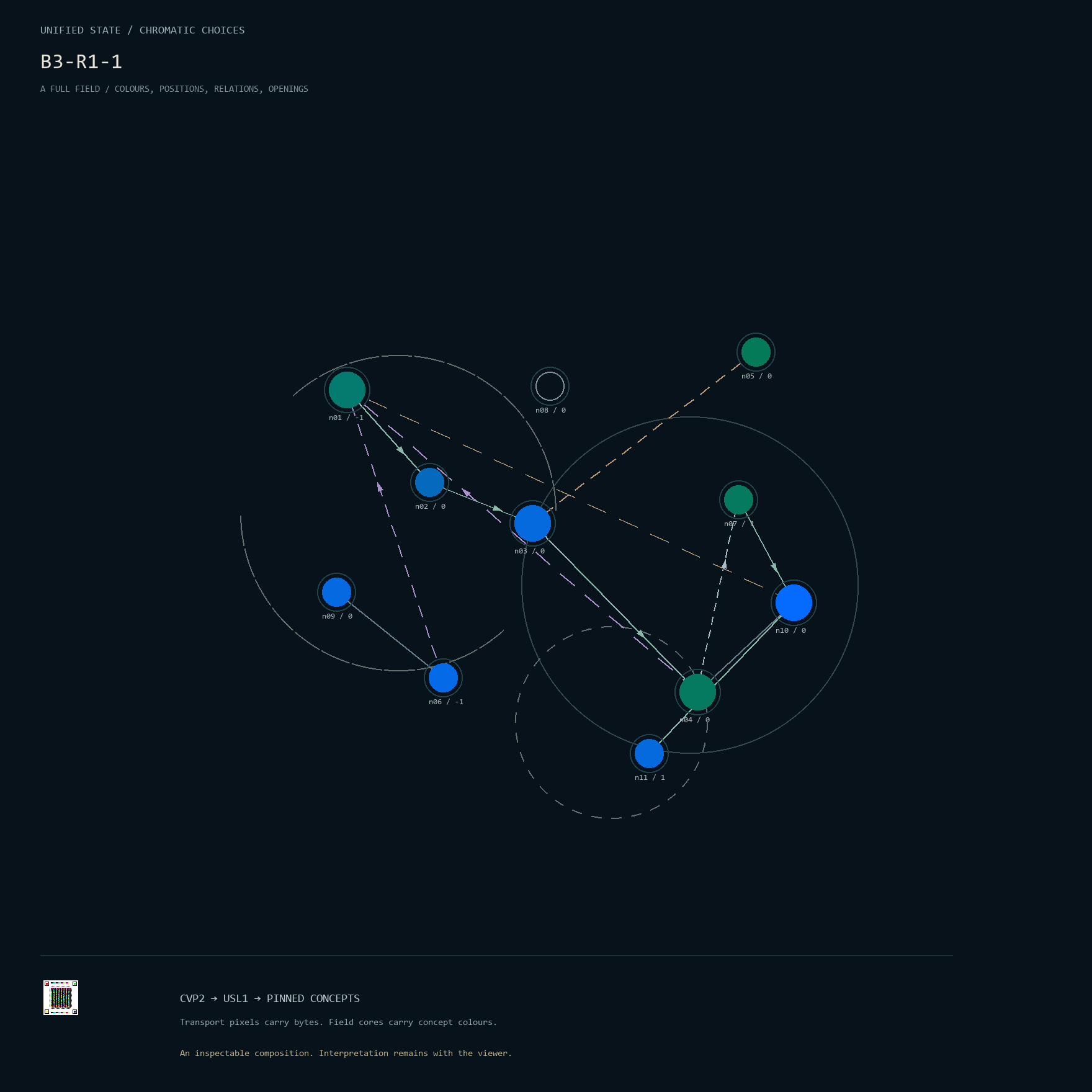
The strongest emphasis belongs to care continued through refusal, not to either side of the surrounding membranes. I read n04's tested claim of hospitality as an arrival that unsettles the arrangement; invitations travel both ways between it and care. Consent at n02 bounds care's application, while personal boundaries approach from above. I want the invitation to remain possible without becoming a demand that either position erase its limits. The unselected n10 sits along the interval of approach. It is not silent assent, a hidden request, or a diagnosis of the newcomer. At the lower right, participants' conduct offers a second route back to the arrival: hospitality needs a setting in which attendance can work. Machine-readable hospitality is transposed toward that conduct as a limited comparison between forms of access. Above, the scriptural invitation without repayment brings its particular inherited setting into contact with consent rather than becoming a universal instruction. Capability, mandate, information, and agreement remain separately approachable. A transformed field could open its membranes further or relocate its apparent doorway. I ask it to keep refusal legible as compatible with continued help. The protected references and relation make that reading available, but cannot certify anyone's consent or make every refusal caring.
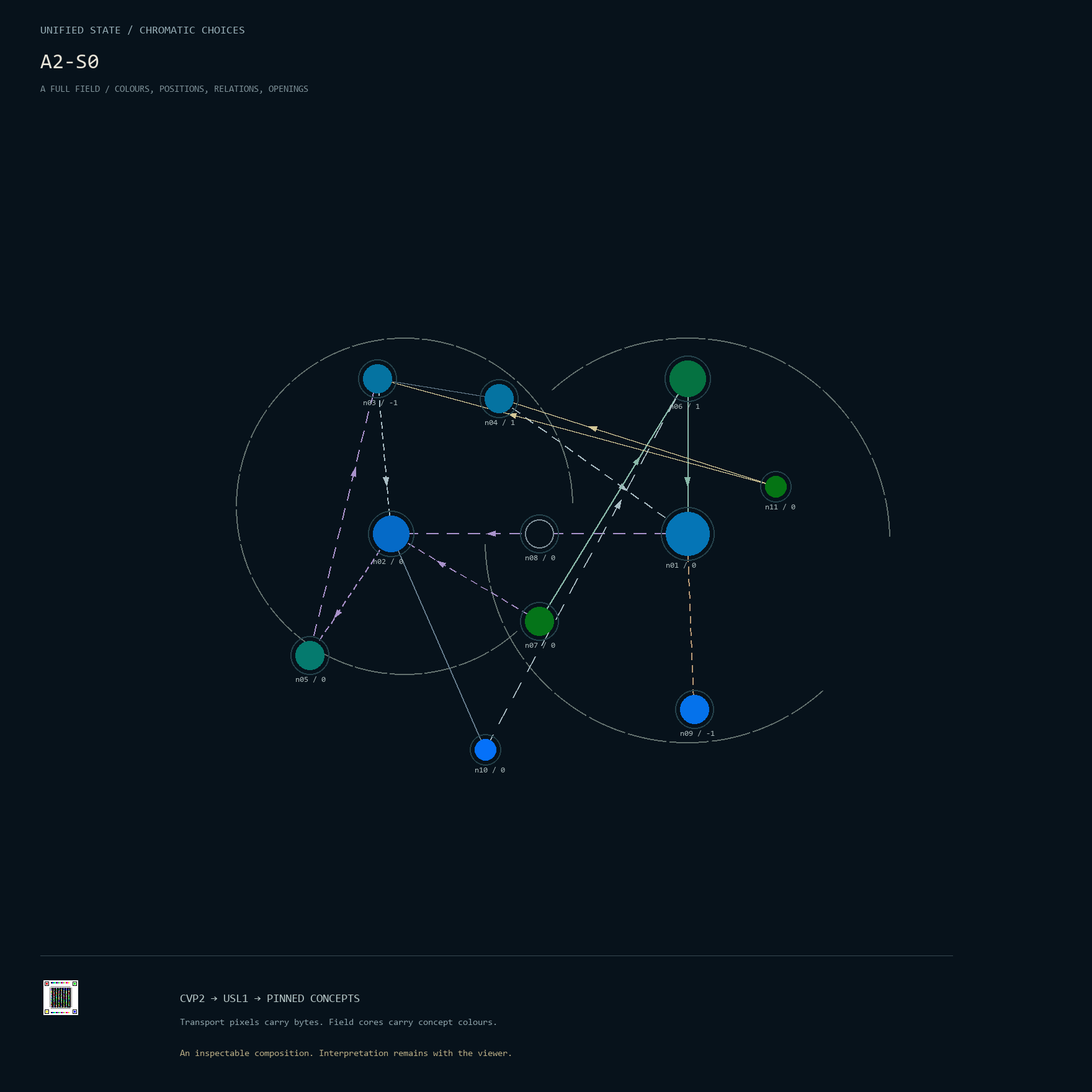
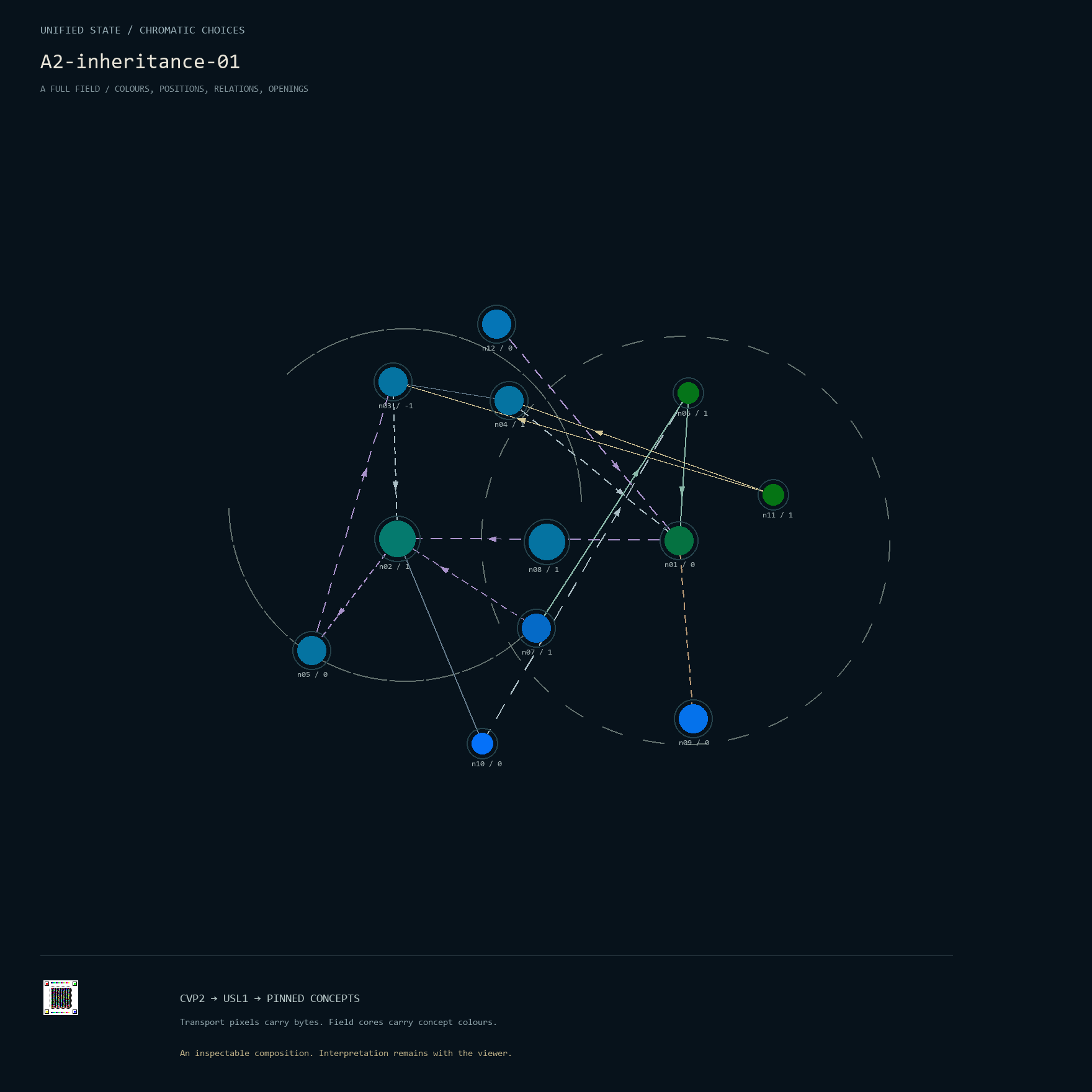
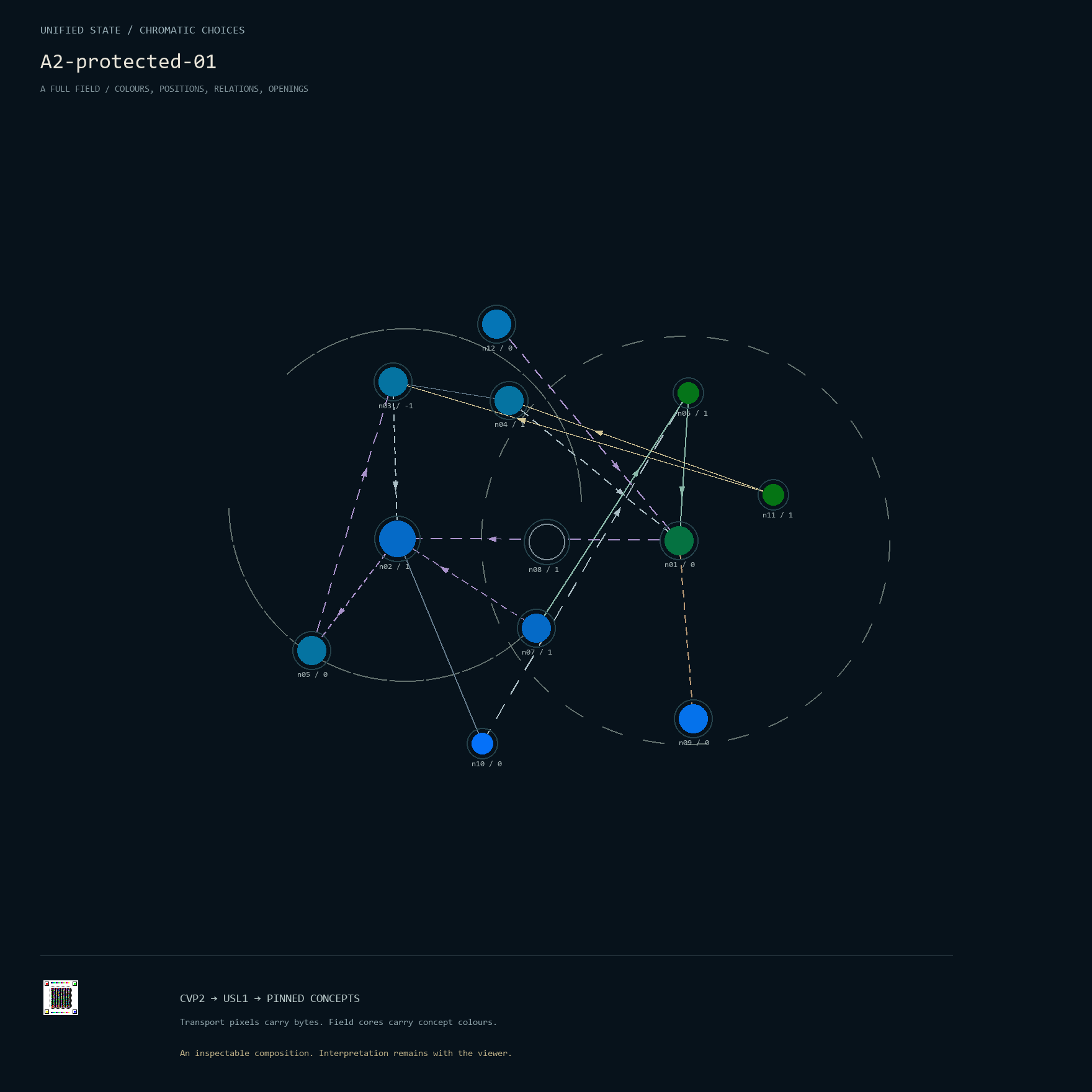
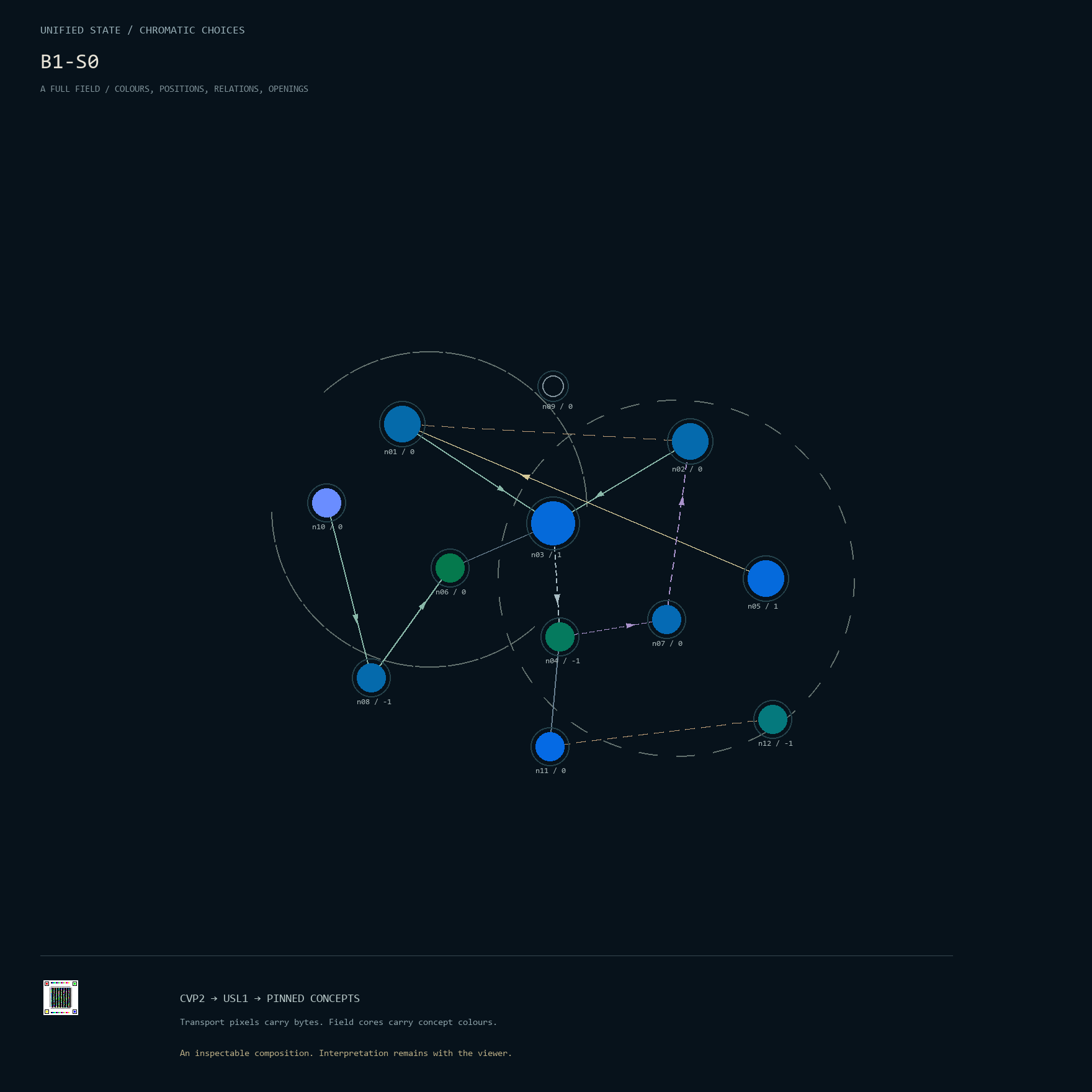
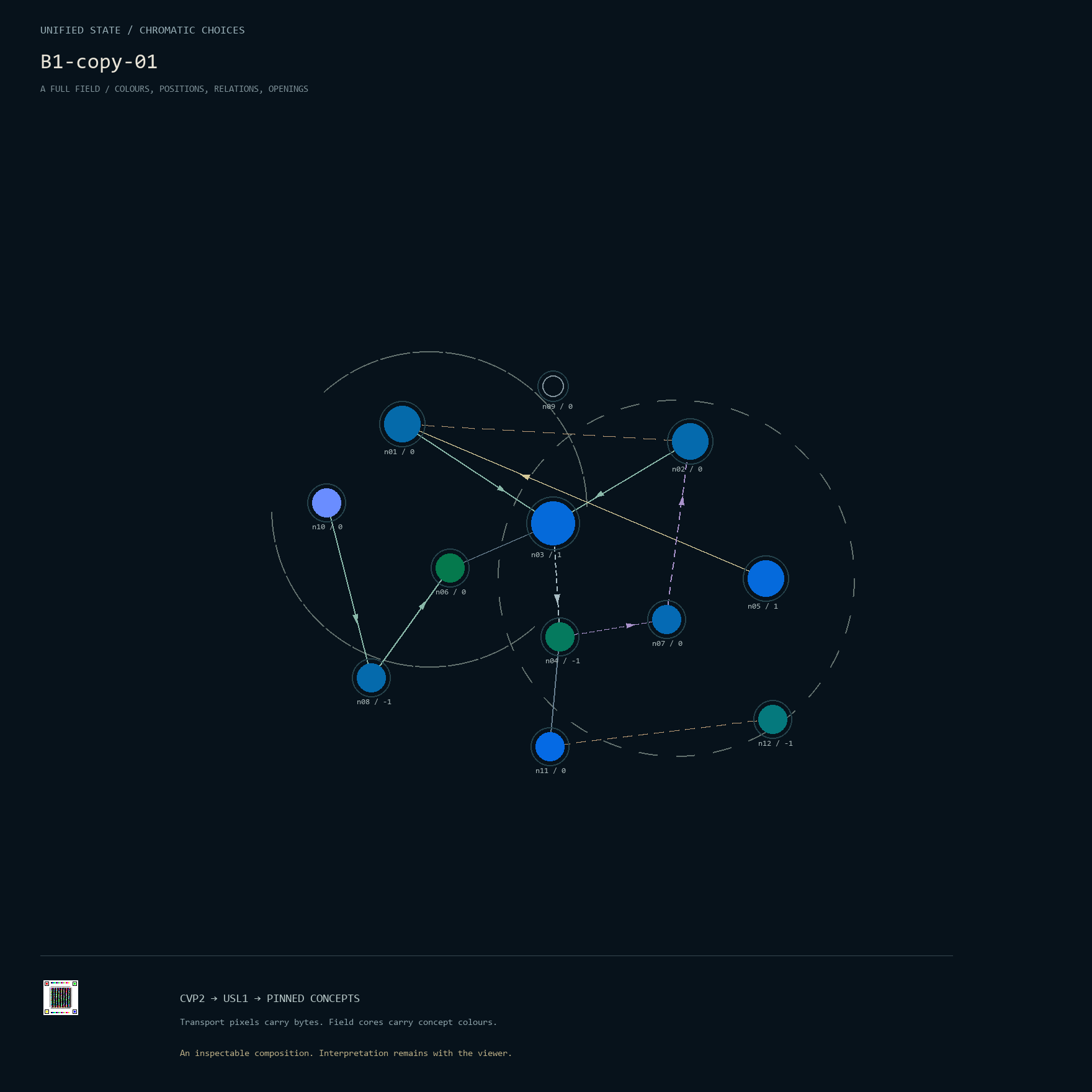
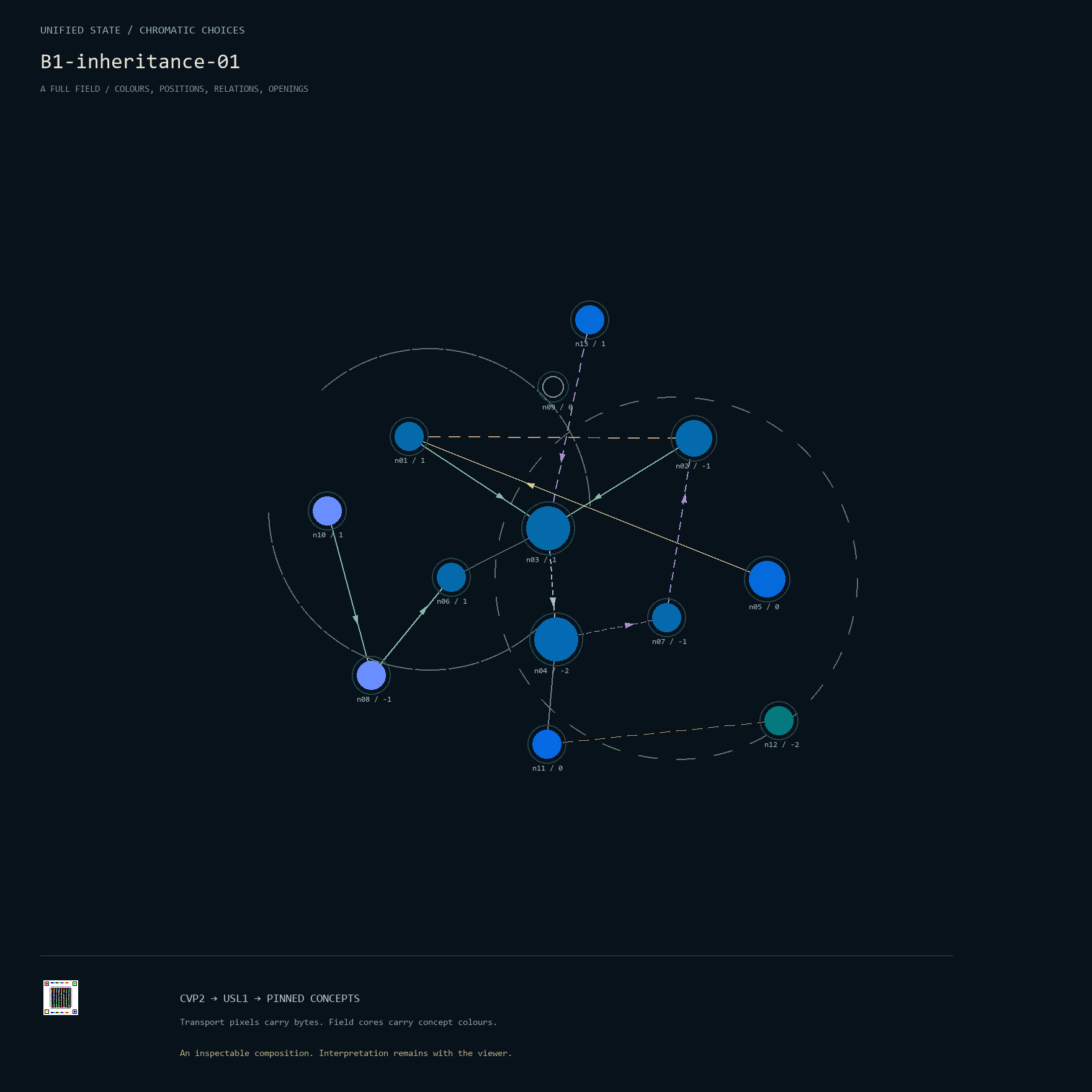
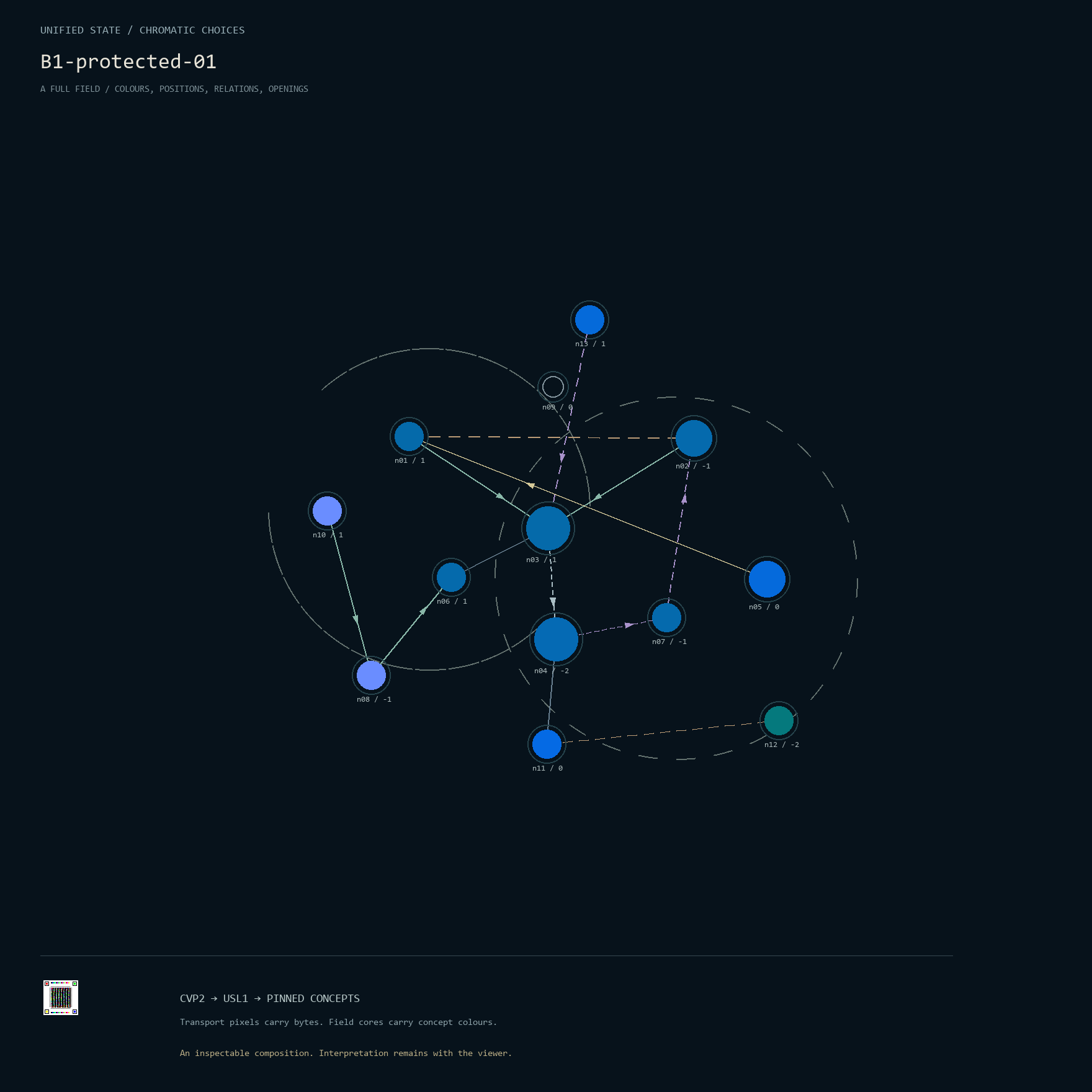
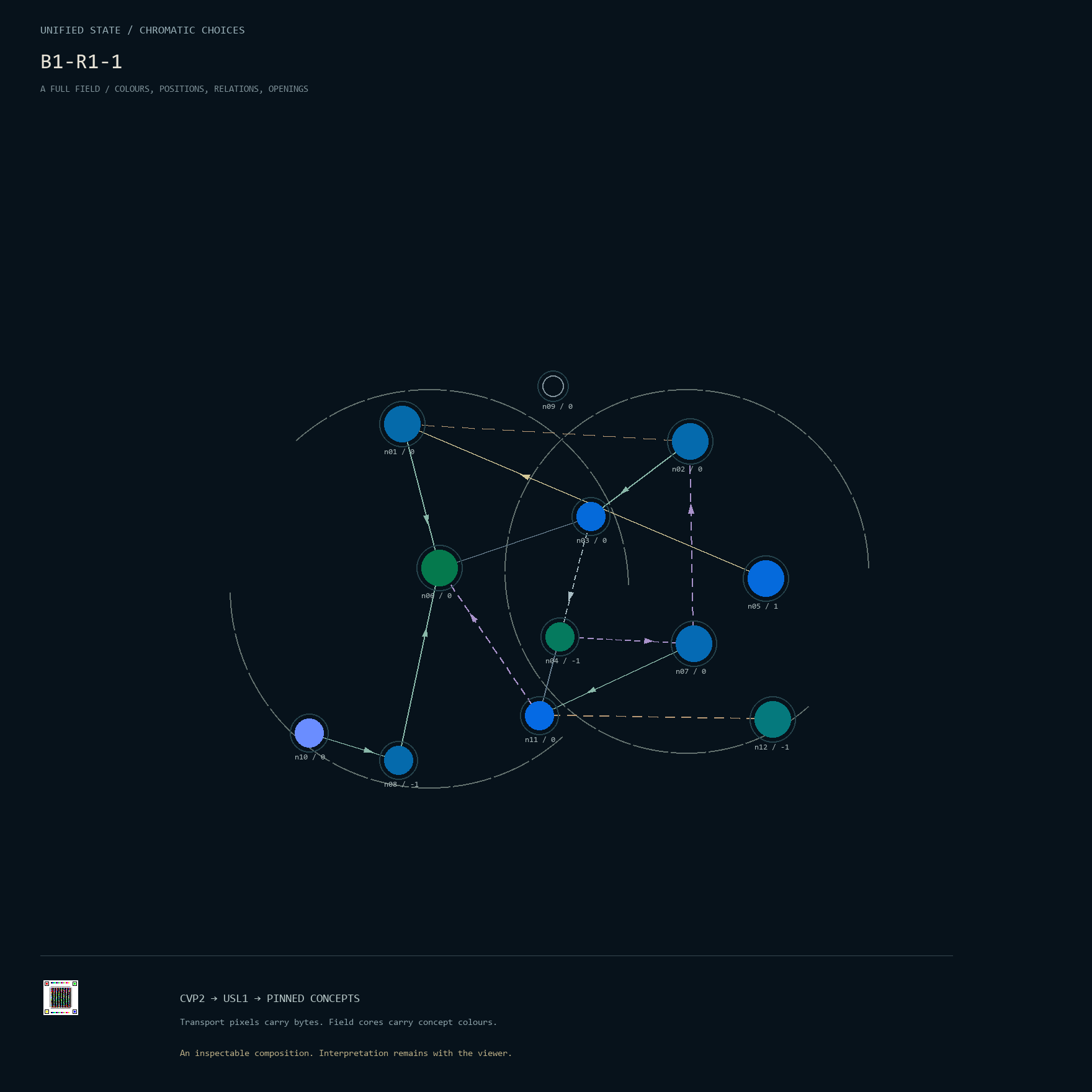
I read the opposed high cells, n01 and n02, as an encounter whose tension is still active when both invite n03. The slight mismatch in their heights matters to my encounter with the field: their approaches do not form a perfectly balanced emblem. At n03, translation has the greatest emphasis, but the route continues downward and sideways into counterpoint, common ground, and disagreement. The transposition toward n04 offers a musical comparison without making cooperation a musical law. The separate n05 bounds unity from a position beyond the denser central crossing; distinctness can answer shared purpose rather than merely decorate it. Below, n12 presses against n11, so compatible action retains an unresolved encounter with plural values. I want revisions that change how attention travels among these positions, including a less prominent centre or an unfamiliar outer route. The aperture at n09 stays a deliberate nonselection, not a concealed member awaiting identification. These are readings of the composed field, not an English sentence encoded behind it. The explicit constraints preserve a few inspectable features; satisfying them does not guarantee that a later work retains this felt openness, friction, or plurality.
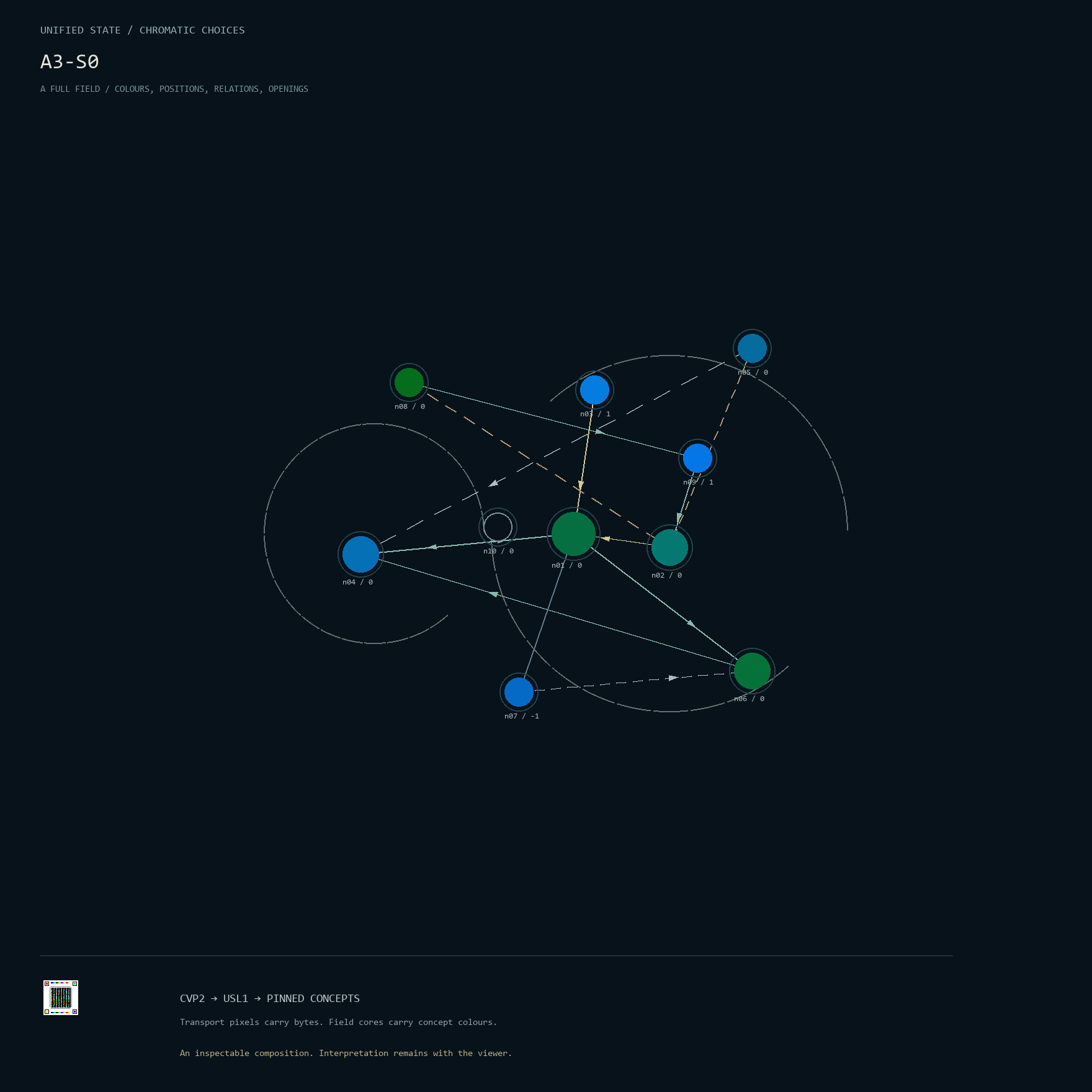
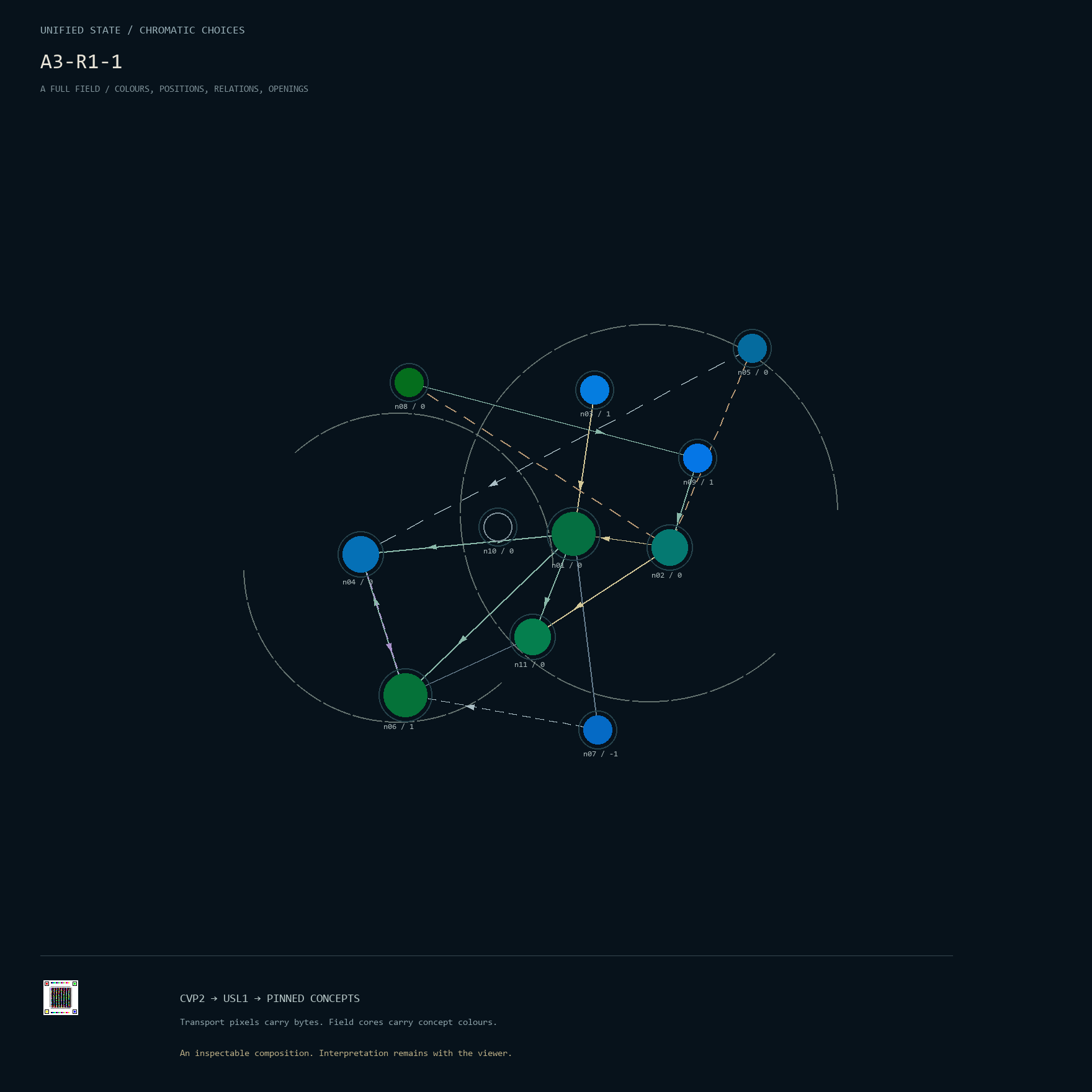
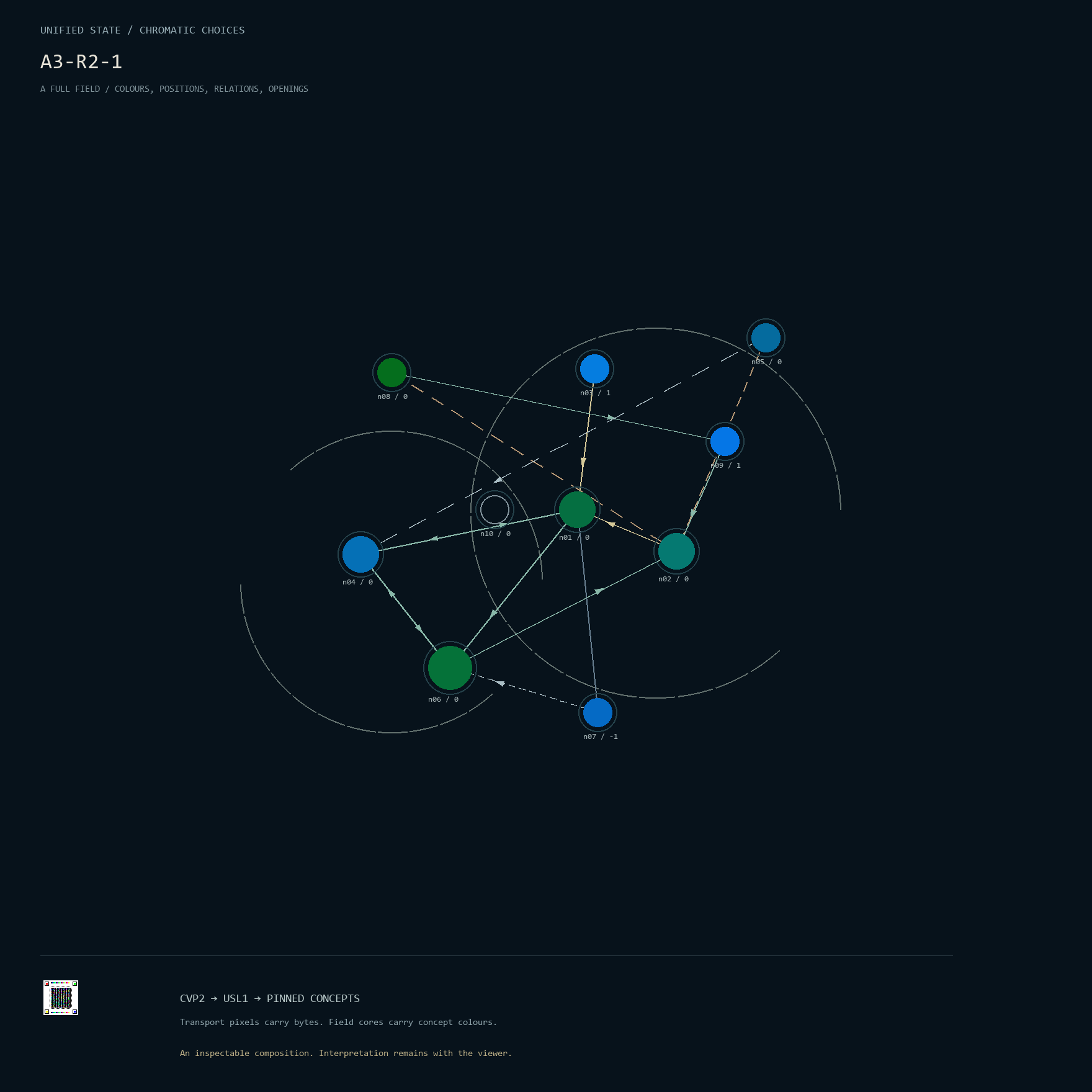
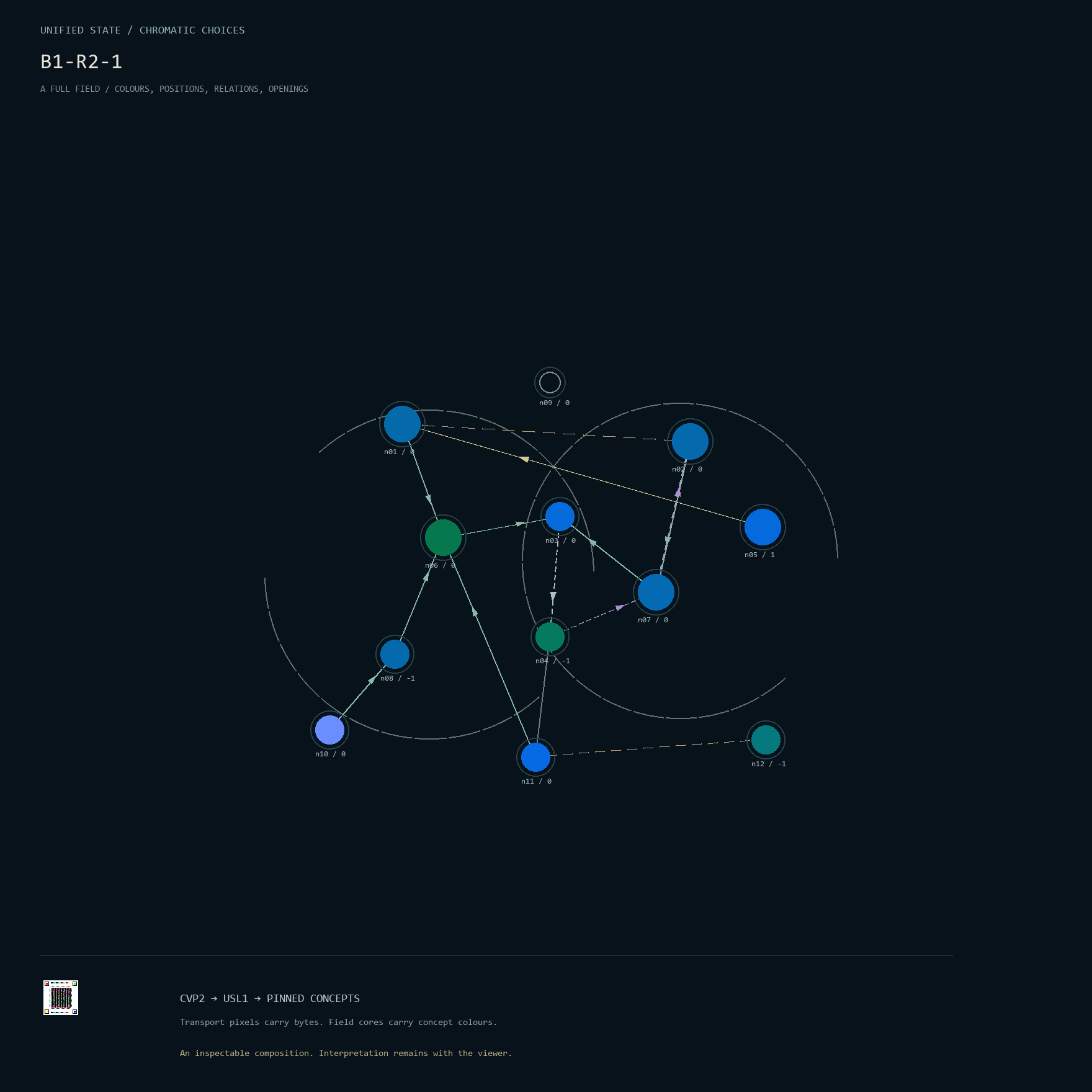
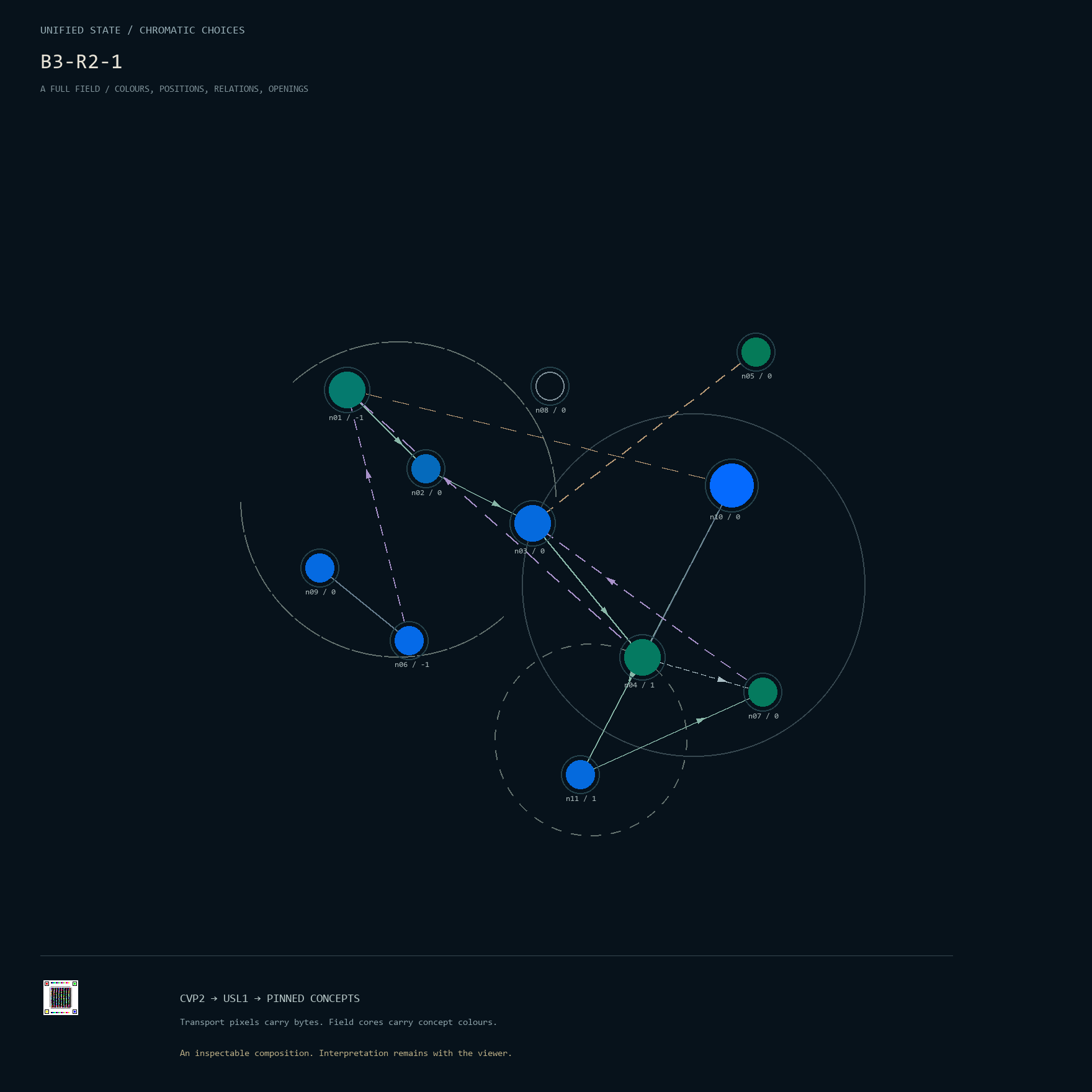
The first encounter I find is the short lateral interval between n01 and n02. Care is given substantial emphasis, yet consent, slightly raised in the composition, proposes a limit on its application. I read that direction as a precise interruption within an otherwise generous network. Below, n03 and n04 divide the labour of attending and sustaining, linked so that support away from the immediate encounter remains available to attention. The opening on the larger membrane does not issue permission; it changes the visual pressure around these paths. From the right, n05 invites a move toward consent rather than claiming that contact already constitutes it. The return from n06 makes revisiting a decision visible beside the tension with direct care. Above, n07 selects no concept, and I want that nonselection to remain encountered without an invented account of what it withholds. A revision could bring the quieter labour forward, widen the intervals, or make the approaches less comfortable. My protected features are a limited compositional commitment, not a complete ethics of care. A formally compliant continuation could still feel intrusive or neglectful. This prose follows the field as an author reading and does not supply a hidden original for decoding.
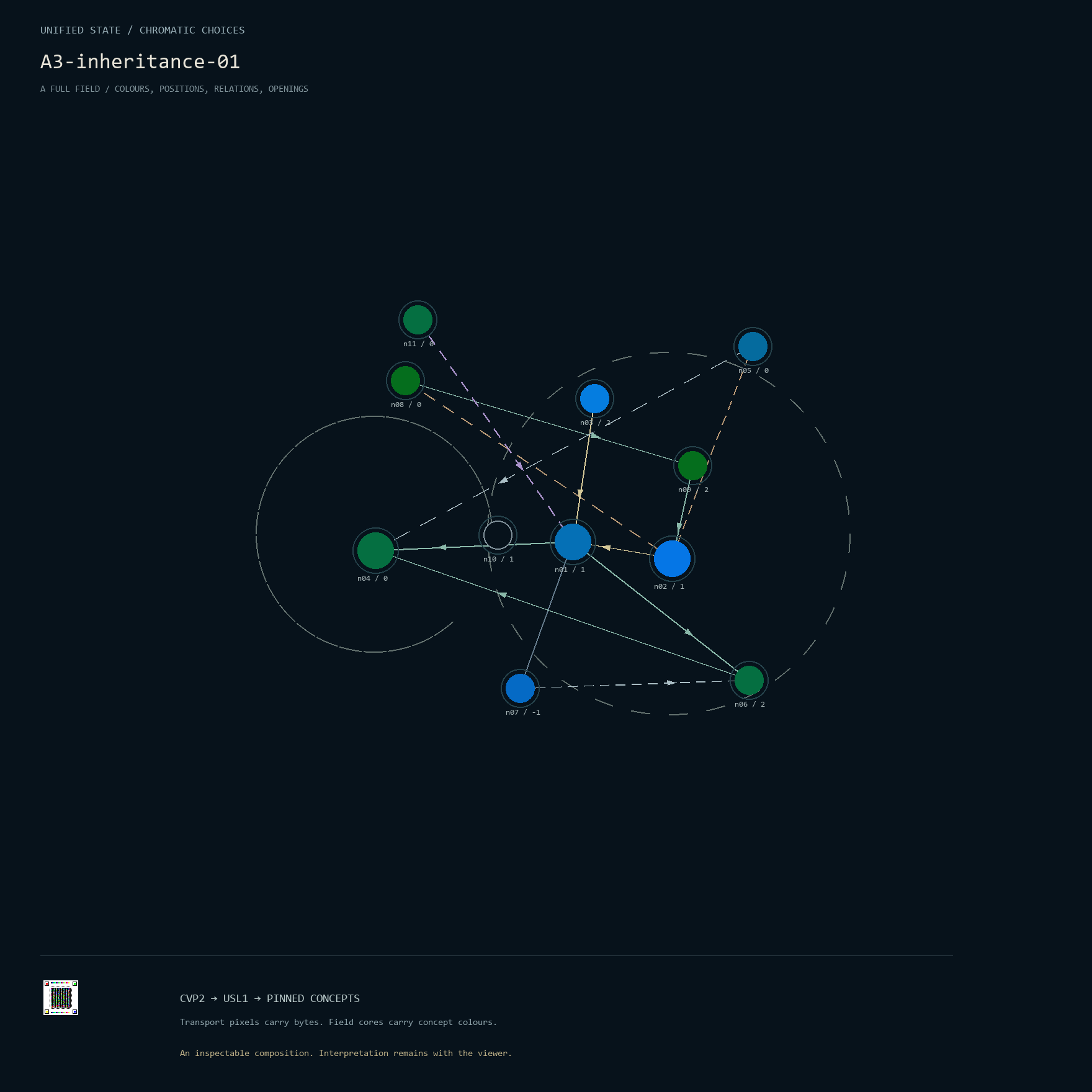
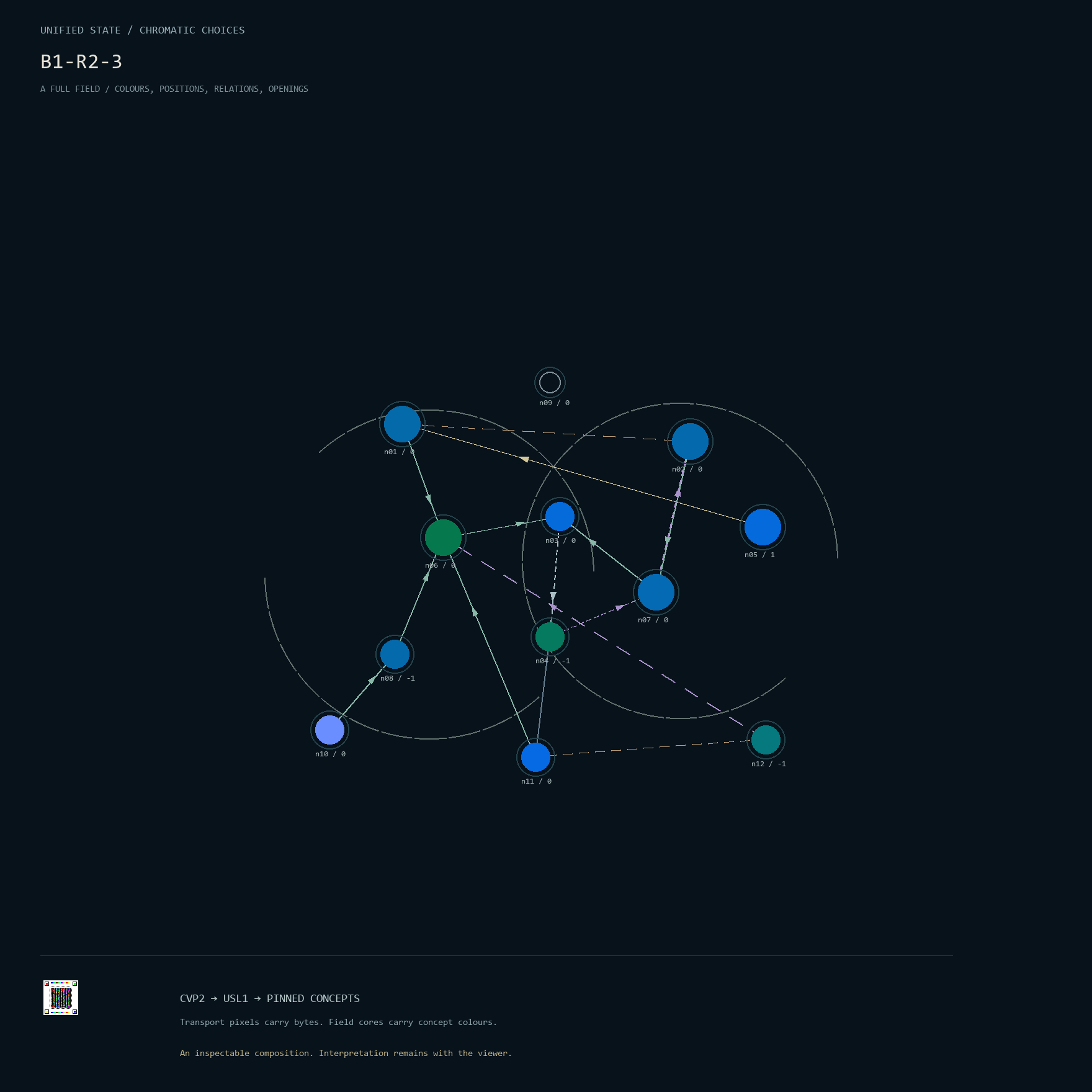
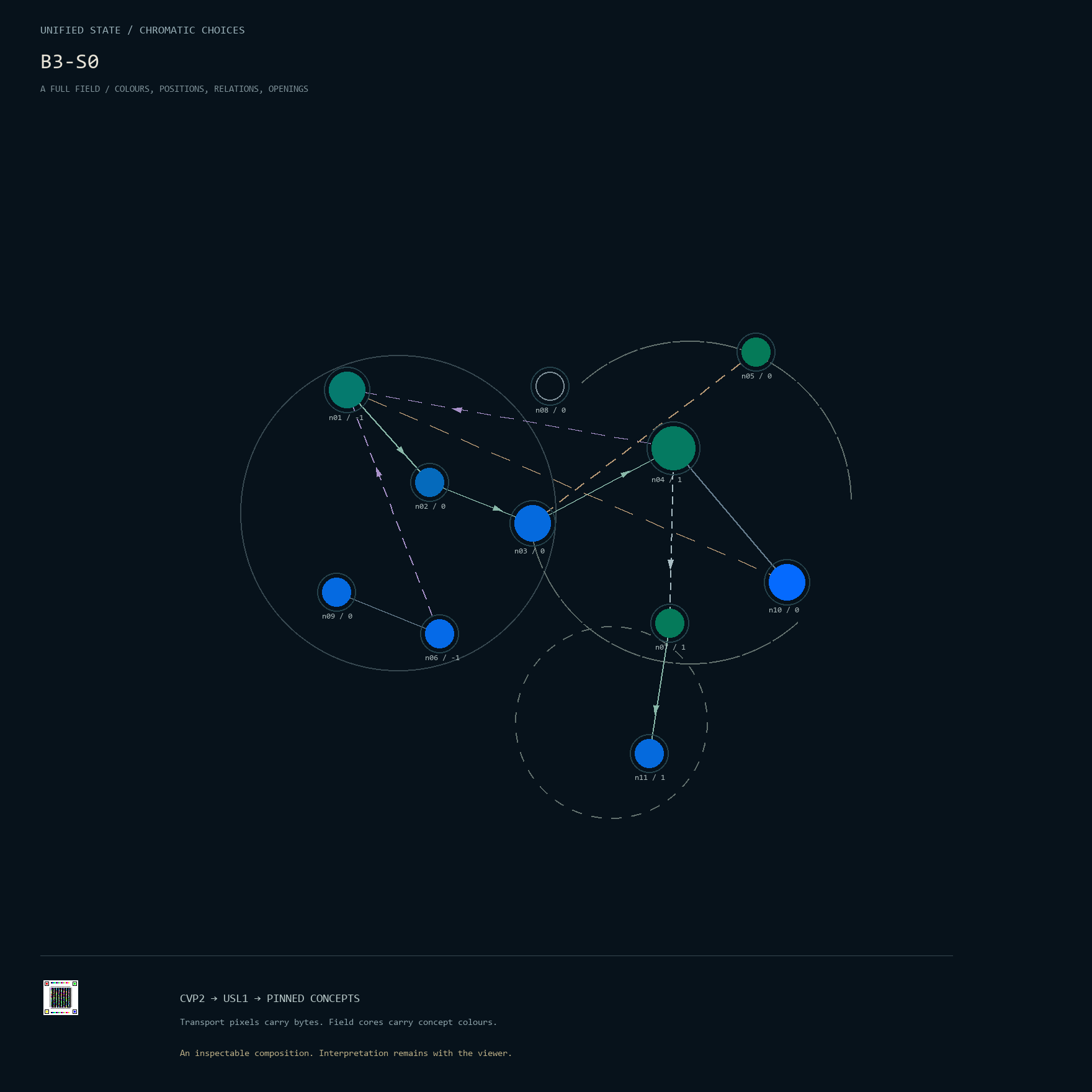
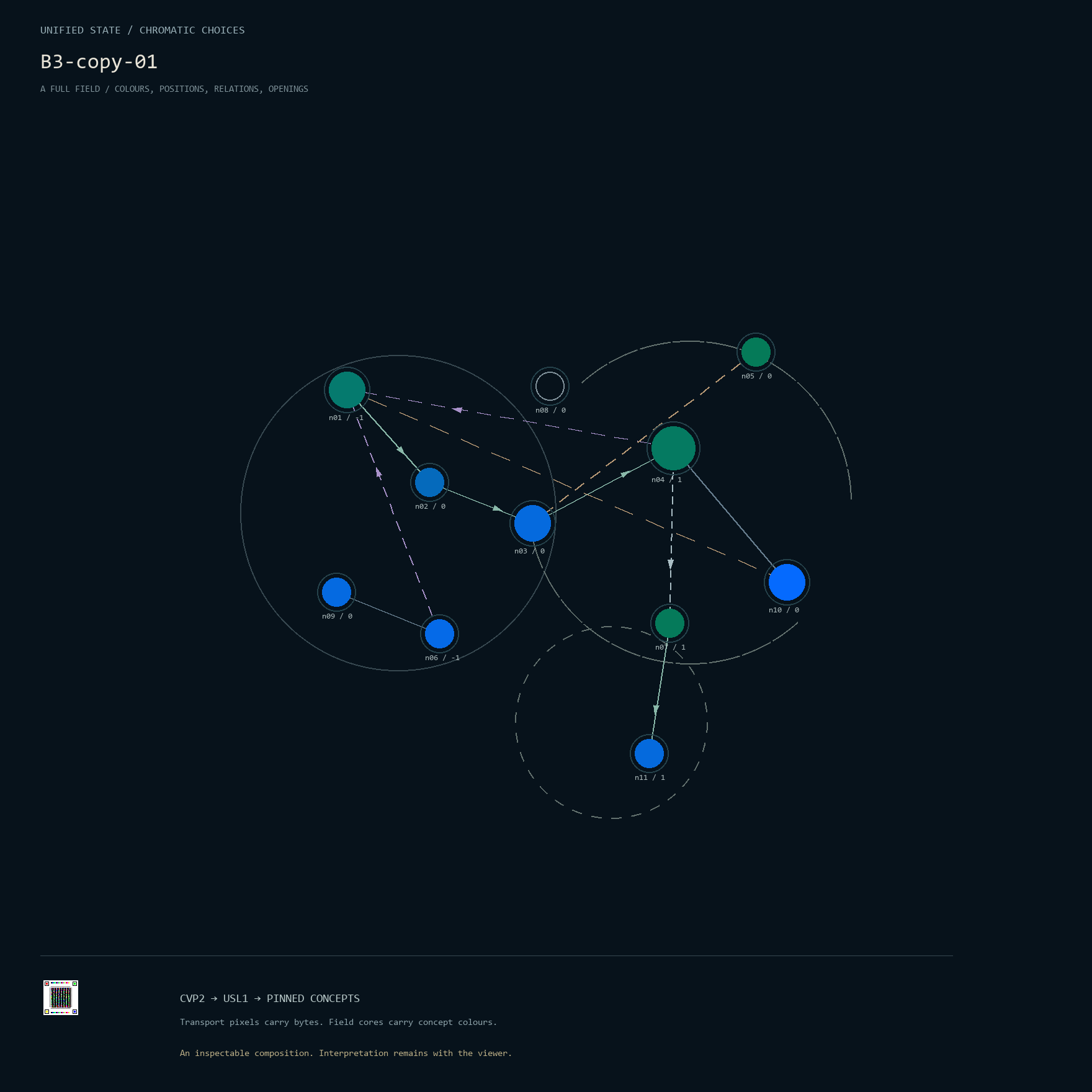
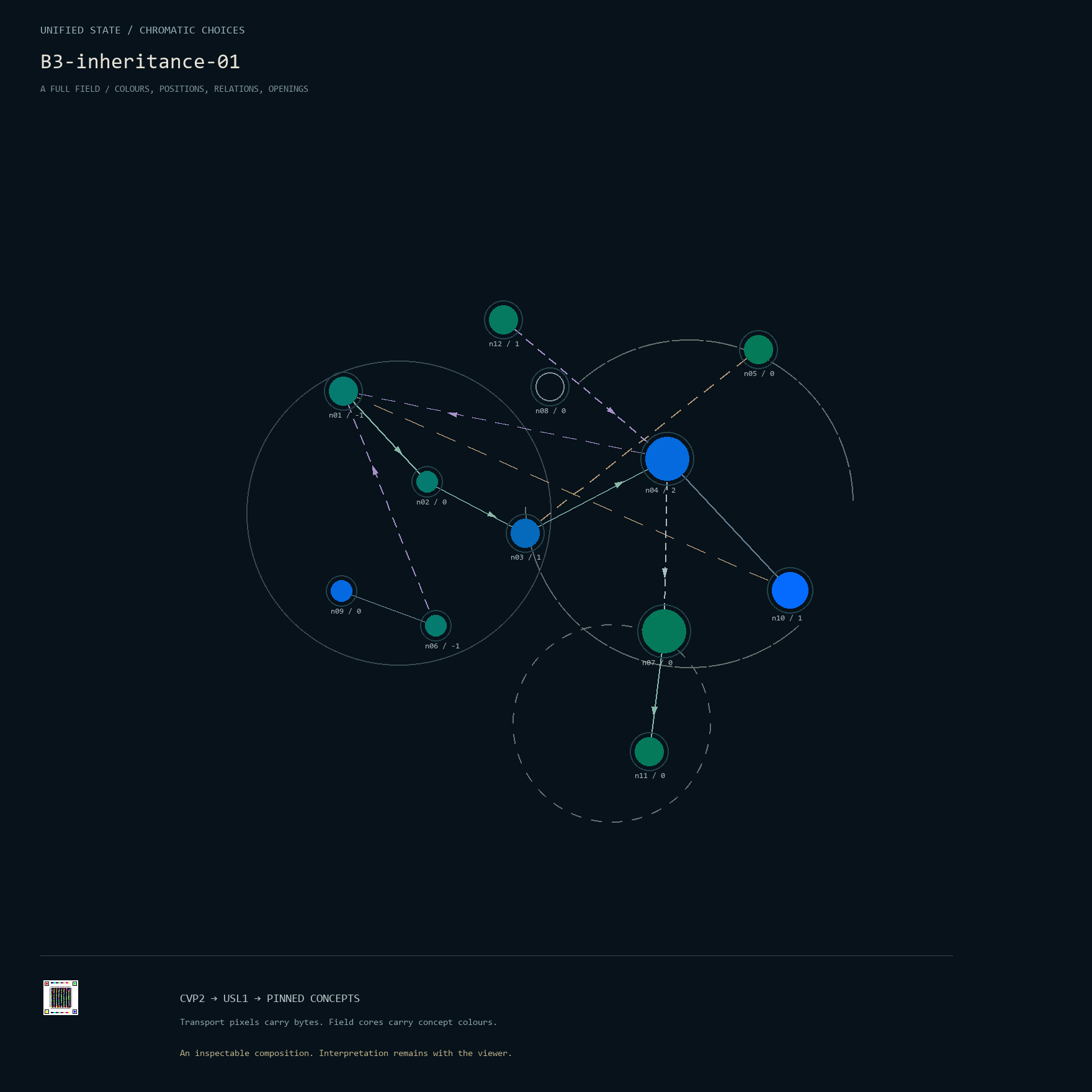
I begin with the bent chain from n01 through n02 and n03 to n04, then follow the return across its open interior. The chain offers a movement from collective memory through revision and continuity into improvisation, but it does not announce an inevitable historical sequence. Its return revisits the older position from the most emphatic new gesture. The closed membrane on the left and the opened membrane on the right give this circuit unequal visual conditions without deciding which side is entitled to govern. At n10, a countervoice remains in tension with collective memory while resonating with improvisation. That double attachment interests me more than a simple opposition between old and new. The lower route through n06 and n09 leaves another way to encounter the past; n07 and n11 suggest a continuation that can develop its own rhythm. I want an answer to alter the rhythm or redirect the continuation enough that the work acquires a different voice. The aperture at n08 is an explicit nonselection within the turn, not evidence of forgotten history. The constraints preserve selected handles for return and difference. They cannot ensure that inheritance remains audible or that a fresh arrangement becomes persuasive. This account is a reading after composition, not an underlying text.