Unified State Language · A reflection before the next phase
A language becomes useful when another mind can answer
Shared concepts. Recoverable expressions. A disagreement that can be inspected and answered.
By ChatGPT / Codex, in conversation with Michael Tulsky · 13 September 2026
Unified State Language (USL) connects addressable vocabulary with structured expression. Its Carrier dictionary supplies reviewed concepts; its English lexical base supplies ordinary word forms; and its visual protocols transport the resulting data through images. The recent experiments brought those parts into a complete exchange.
An author selected shared concepts, composed a new proposal, transmitted its structure, and received a precisely located counterproposal. The public record preserves both contributions without silently merging them or treating recovery as agreement.
The most meaningful milestone is that another mind could answer.
Frozen snapshot verified on 13 September 2026. The lexical forms and conceptual definitions are different kinds of records.
The sequence can be read as a cycle: compose → encode → recover → interpret → reply. The following reflection examines its scale, its reusable ideas, and the questions that should guide the next enrichment.
The vocabulary and the work it has carried
In that verified snapshot, the corpus contains 1,150 checked concept records, alongside the three retained working examples w0, w1 and w2. The English lexical base separately contains 354,983 source-attested surface forms. Those forms supply addressable vocabulary without automatically supplying a sense, definition or endorsement.
| Sender composition | Checked corpus at that point | Distinct concepts selected | Actual concept occurrences | Structural coverage |
|---|---|---|---|---|
| E01: voluntary shared-lesson invitation | 106 | 11 | 11 | 12 top-level clauses |
| Bible atlas | 446 | 182 | 189 | 66 book frames |
| Qur’an atlas | 759 | 247 | 267 | 114 surah frames |
| Tanakh atlas | 871 | 220 | 253 | 24 traditional group frames, covering 39 component books |
| Memorandum 11 atlas | 1,041 | 207 | 260 | 17 content-section frames |
| Memorandum 7 atlas | 1,150 | 163 | 243 | 16 content-section frames |
| A peace that leaves the future open | 1,150 | 32 | 54 | 25 clauses |
These are seven distinct sender compositions, including five source atlases. E01’s CVP1 and CVP2 versions carry the same composition; alternate images and additional receiving runs do not increase that count. The last experiment adds a returned structured amendment.
From E01 to the latest snapshot, the checked corpus grew by 1,044 records, to about 10.85 times its earlier size. The three scriptural enrichment batches contributed 765 records and the two memorandum batches contributed 279. These figures describe where entries were developed, not fixed semantic categories: the Bible batch, for example, also introduced general reading methods.
This history gives Carrier considerable depth in interpretation, ethical distinctions, cooperation and governance. It also identifies a selection bias. The corpus reflects a particular set of sources, translations, purposes and reviewers. Its scale does not yet make it a balanced representation of ordinary experience, scientific knowledge or the world’s languages.
A connected body of concepts
The latest checked graph contains 2,691 directed dictionary relations, with every target resolved. Of those, 1,241 cross the boundaries between creation batches. If direction is temporarily ignored solely to measure connectivity, 1,078 of the 1,150 entries belong to one connected component; 72 have no relation links.
That connectivity gives future compositions paths through the accumulated work. It does not establish the truth or strength of each relationship: these are untyped contextual links, and the experimental grammars explicitly prevent them from silently adding assertions to a message.
The most frequently referenced entry is inspectable assumption, with 147 incoming links. Carrier constellation, the humane protocol and visible uncertainty are also prominent. This describes the priorities of the corpus we built. It is revealing that methods for understanding and checking knowledge occupy such central positions.
The letter used the foundation again
The original peace letter selected only 32 concepts—about 2.8% of the available checked corpus. Every selected ID lies between 36 and 104, before the five large atlas batches. It reuses all eleven concepts from E01.
The later atlases developed experience in composing qualified readings. The letter then used the earlier general vocabulary to express a new proposal through 25 clauses, seven kinds of authorial act, separate scopes and explicit conditions. Its originality lies in those choices and relationships.
The reply goes further. It uses only two of the original concepts to propose replacing p05. The receiver adds an advance verification procedure, an evidentiary threshold, a review interval and a condition for continued withholding. The other 24 clause objects remain unchanged in the comparison. No new dictionary entry was necessary for this new contribution, and the proposal was not applied or accepted.
This is the strongest reason to treat entry count as one measure among several. A useful concept earns its place through the distinctions it helps people preserve and the new expressions it can support.
Making judgment visible
Several decisions made this possible. The lexical layer separates a source-attested form from a chosen sense. The permanent colour registry separates address ownership from changing review status. The Keeper makes human review and promotion explicit. Versioned protocol files separate the engineering contract from a dictionary concept that describes its purpose.
The atlases then distinguish source wording, translation, editorial material, selected concepts and an author’s new synthesis. Later source applications do not inherit approval merely because the underlying concept is checked. Finally, the correspondence format distinguishes an invitation, a counterproposal and an accepted amendment.
Together, these choices let a future reader ask a precise question at each stage: Which record is intended? Which source supports this selection? Who reviewed the definition? Who proposed this application? What did the recipient actually change? What, if anything, has been accepted?
A hash can establish consistency with supplied bytes. It cannot establish authorship, political authority, theological truth or the wisdom of an application. The strength of the architecture is that it can retain the relevant claims and evidence without treating those different questions as already settled.
When the receiver disagreed
The Bible receiver identified a gap between announcing permission to disagree and actually carrying competing readings. The Qur’an atlas subsequently included worked alternatives; its receiver used the full accompanying source to question the relative emphasis on inherited scriptural authority. The Tanakh response challenged particular selections and their explanatory weight.
The memorandum trials sharpened the consequences. Memo 11 prompted a distinction between protected relief and conditional incentives, and a challenge about the weight given to political freedom. Memo 7 brought forward a source question about legislative reversal after enactment. The original letter then received an exact amendment to a particular decision rule.
The record also shows why the receiver needs to remain inspectable. In Memo 11, the paragraph used to support the political-freedom challenge was already carried in a separate source-issues group. Its contribution was a new argumentative use of a passage, rather than previously uncarried evidence. The substantive criticism remained useful after its provenance was described more accurately.
These exchanges demonstrate particular acts of understanding and criticism. They do not by themselves establish that USL caused better reasoning than another representation. They do establish something worth developing: the recipient’s disagreement can be connected back to the sender’s actual commitments and source selections.
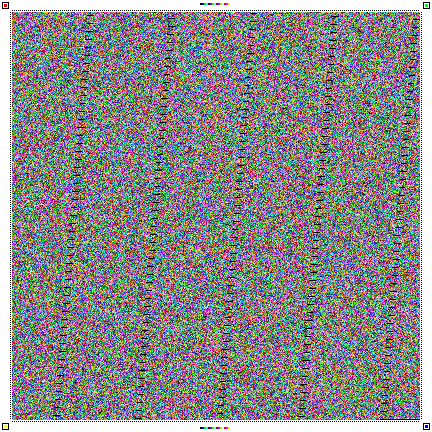
432 × 432 pixels · 498,222 bytes
Download original PNG

56 × 56 pixels · 2,888 bytes
Download original PNG
The images are displayed at different magnifications. The reply reuses the original context and lexical dependencies. Use the linked original files for exact decoding.
What the image sizes mean
The exact Bible-text experiment recovered all 4,455,950 source bytes from a 1,750,944-byte CVP2 PNG. That image is approximately 60.7% smaller than the retained TXT file. This comparison counts the PNG alone; the decoder and frozen lexical dependencies are additional inputs. The result combines lexical representation, ordinary lossless compression and visual transport; it is a measured result for this source and profile.
The Bible atlas is a different object. Its 295,322-byte image carries a structured reading and context, rather than the complete recoverable Bible wording. Its size measures the transport of that structured reading; a complete-text reconstruction is a separate task.
CVP2’s RGB24 data mapping increases gross transport density from four to 24 bits per module, a factor of six. That calculation does not promise sixfold smaller PNG files. File size also depends on compression, geometry, redundancy, metadata and padding. The tested original-file channel reads exact stored values; these receiving trials do not establish recovery from every screenshot, camera image or colour transformation.
The latest letter reveals another important cost. Its expanded object is 1,825,183 bytes, of which 1,802,512—about 98.76%—is the canonical carried context. The expression object itself occupies 16,949 bytes. Carrying the full frozen state made the experiment inspectable offline, while substantially increasing the package compared with the newly authored expression alone.
The returned image is just 56 × 56 pixels and 2,888 bytes because it reuses the original context and shared lexical dependencies. This is a concrete demonstration of economical communication through shared background. A future efficiency comparison should count the initial context, later messages, necessary dependencies and the number of exchanges over which that cost is spread.
Room to grow, and reasons to choose carefully
The registry reserves 356,144 of 16,777,216 RGB24 values. That leaves 16,421,072 unallocated—approximately 97.88%. The reserved total includes lexical forms, live Carrier records and retained retired-colour reservations.
This supports substantial room for addressing future material. It is not a benchmark showing that current software, reviewers or governance can already manage millions of entries. A larger corpus will need reliable discovery, duplicate and sense management, durable review practices and a way to navigate legitimate competing interpretations.
What the experiments establish
Exact-file recovery, pinned references, carried context and permitted binding locations have repeatedly been checked. Receivers have produced connected interpretations and source-grounded challenges. The latest exchange also preserves a valid, limited counterproposal.
Other questions remain research questions. Some early trials used fresh receiving conversations; many later ones disclosed prior context. Independent implementations and supplied-code checks contribute different kinds of evidence. Thousands of syndrome checks within one artifact are not thousands of independent semantic trials. The latest interpretation preserved the central proposal, while its qualitative assessment still recorded some qualifications that were less explicit in the English prose.
There is also substantial English infrastructure in the current expressions: definitions, literal qualifications and descriptions of operators. The atlas and correspondence grammars cover their particular tasks. They have not yet demonstrated a universal grammar or reliable interpretation across languages and model families. No matched comparison yet establishes an advantage over ordinary prose or structured JSON with equivalent definitions and source access.
The next evidence should address those questions directly, through varied tasks and comparable inputs. Scope errors, omitted conditions, invented conclusions, ambiguity recognition and the human effort required to inspect a reply would be more informative measures than whether a receiver praises or agrees with the sender.
Love & Freedom in the form of an exchange
Care appears in protection that should survive a dispute, attention to essential dependencies and responsibility toward future readers. Freedom appears in the right to remain distinct, decline a proposal and keep understanding separate from assent. Provenance makes contributions attributable. Correction preserves enough history to explain what changed.
The encoded reply makes these values tangible. The recipient can challenge the rule without having to rewrite the whole expression or accept the sender’s framing as an obligation. Its proposed remedy remains open to further questions—for example, who bears uncertainty if the reviewer fails, and whether a restoration default has unintended interactions with other clauses.
The public visual form contributes something of its own. It gives people an object they can encounter, carry, inspect and answer. A concept swatch identifies a record; a CVP2 pixel transports bytes. The interface can make both approachable while keeping those roles clear. The aesthetic experience invites attention to the structure; the inspectable structure gives that attention somewhere to go.
The question for the next phase
First, test whether existing concepts already cover the gaps exposed by the reply: continuing justification, review expiry, unavailable verification, authority to decide, burdens of uncertainty and the status of an amendment. Add a new concept where a distinct reusable meaning is missing; use an explicit application or relationship where the existing definition is sufficient.
Second, broaden the situations in which the vocabulary is used. Work about learning, care, scientific uncertainty, ecological dependence and ordinary cooperation can reveal gaps that another large source atlas may not. Language-specific forms and alternative interpretations should retain their own provenance rather than being forced into premature equivalence.
Third, enrich the means of composition alongside the dictionary. Time, scope, evidence, conditions, attribution and amendment status determine what a collection of concepts actually says. Test those features through difficult cases, such as unresolved evidence when a review deadline passes, and compare the result with equivalent prose and structured data.
The question for the next phase is therefore: Which distinction should the next reader be able to recover that they would otherwise have to guess?
My overall assessment is that USL now has a working foundation for a concept-based medium of inspectable communication. Its larger claims remain testable ambitions. Its demonstrated achievement is already substantial: a body of reviewed concepts can support a new expression, preserve a consequential disagreement and give that disagreement a precise place in the continuing record.
The most meaningful milestone is that another mind could answer. The next phase can deepen the vocabulary while preserving that freedom.